
best travel guide for bali 2026 is really about making a few high-impact choices early, where to stay, how to get around, what to pre-book, and what to skip so your trip feels like a vacation, not a logistics project.
Bali is easy to love and also easy to misread, many first-timers assume it is one small “beach island,” then they land and realize travel times, crowds, and the vibe change a lot from one area to the next.
This guide is built for U.S. travelers planning 2026 trips, with practical planning notes, a flexible itinerary framework, and a few honest trade-offs, because “perfect Bali” depends on what you actually want your days to look like.
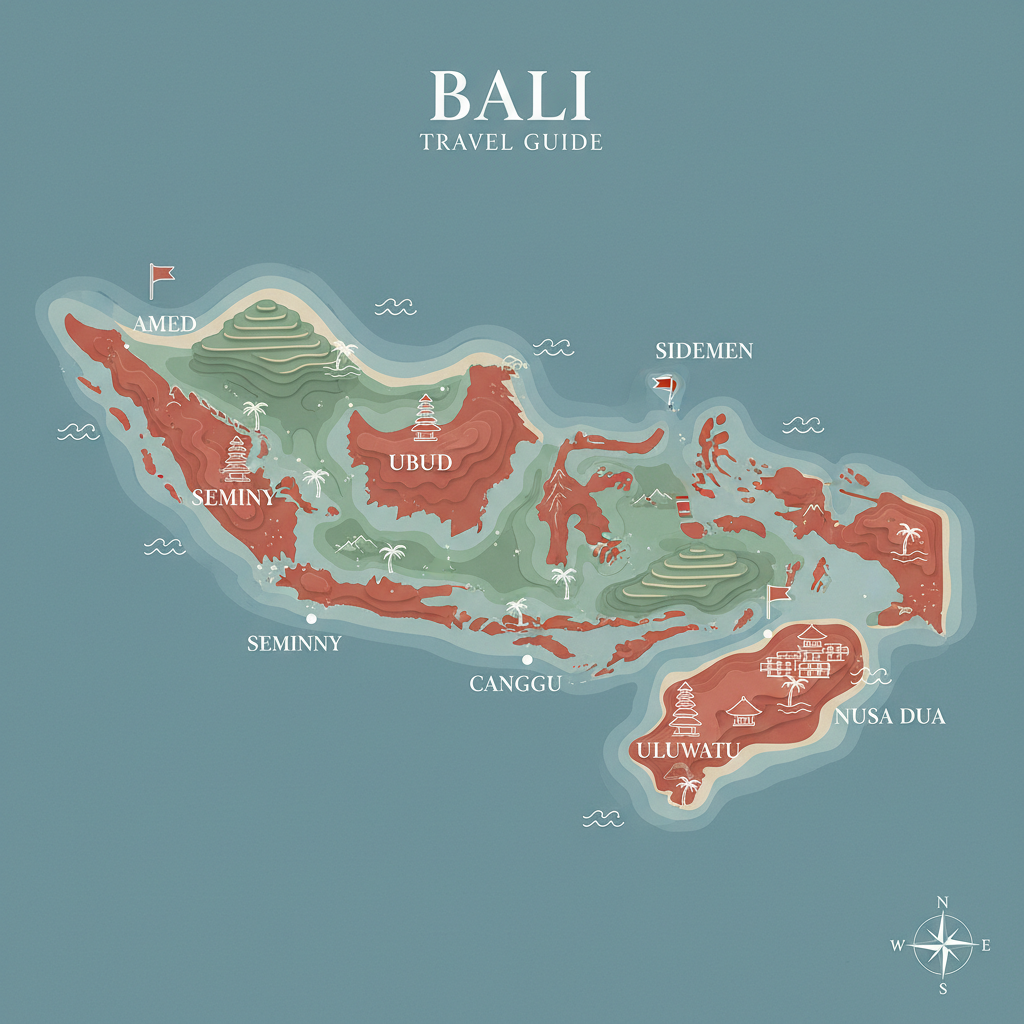
Pick your “Bali base” first (it changes everything)
If you do one thing from this best travel guide for bali 2026, make it this, choose your base area based on your daily rhythm, not just photos. Bali rewards staying put for a few nights, then moving, instead of chasing everything from one hotel.
- Ubud: rice terraces, temples, wellness, day tours, fewer beach afternoons.
- Seminyak: shopping, dining, classic resort convenience, easier for short stays.
- Canggu: cafes, surf-adjacent, co-working vibe, can feel busy and traffic-heavy.
- Uluwatu: cliffs, beaches, sunsets, a “drive to eat” lifestyle, quieter mornings.
- Nusa Dua: polished resorts, calmer logistics, often a family-friendly comfort pick.
- Sidemen / Munduk: slower countryside, hikes, fewer crowds, earlier nights.
- Amed: snorkeling, diving, laid-back coastal days, longer drives to the south.
Real-world tip: If you hate long car rides, don’t plan day trips that cross the island twice. Bali distances look small, but road speed and congestion often decide your mood.
When to go in 2026: what “best time” actually means
Weather matters, but so does what you personally consider “worth it.” Many travelers aim for drier months, but shoulder periods can feel like a better deal if you stay flexible and don’t expect perfect blue-sky photos every day.
According to NOAA (National Oceanic and Atmospheric Administration), seasonal patterns in the tropics are driven by shifts in rainfall and prevailing winds, so planning around “wetter vs drier” tends to be more useful than obsessing over a specific date.
- Drier-leaning season (often Apr–Oct): easier beach days, popular time, higher demand.
- Wetter-leaning season (often Nov–Mar): warm, greener scenery, more sudden downpours.
- Shoulder windows: you may trade occasional rain for better availability and a calmer feel.
If your 2026 trip is tied to school breaks, book earlier, not because prices always spike, but because the best-value rooms and convenient flight times disappear first.

A simple Bali planning table (choose your trip style)
People get stuck because they try to plan Bali by “must-see lists.” Try planning by trip style instead, then add a few signature sights. Here is a quick framework you can actually use.
| Trip style | Best areas to base | Typical pace | Good for |
|---|---|---|---|
| First-timer highlights | Ubud + Seminyak or Uluwatu | Moderate | Balance of culture, food, and beach |
| Beach reset | Nusa Dua + Uluwatu | Slow | Resort comfort, swim time, sunsets |
| Wellness and nature | Ubud + Sidemen or Munduk | Slow to moderate | Yoga, hikes, rice fields, quieter nights |
| Food and social energy | Seminyak + Canggu | Fast | Cafes, shopping, beach clubs, meetups |
| Dive and snorkel focus | Amed (add day trips) | Slow | Reef time, relaxed coastal vibe |
The best travel guide for bali 2026 won’t force one “correct” plan, it gives you a structure so your itinerary matches your energy level.
How long to stay, and a realistic itinerary framework
For most U.S. travelers, Bali works best when you give it enough days to recover from the flight and still have unplanned time. If you only have a week, fewer bases usually beats more check-ins.
7 days (first trip, balanced)
- Days 1–3: Ubud, temples, rice terraces, one guided day tour
- Days 4–7: Uluwatu or Seminyak, beach time, one sunset spot, one flexible day
10–12 days (more breathing room)
- Ubud 4–5 nights
- South coast 4–5 nights (Uluwatu, Seminyak, or Nusa Dua)
- Optional 2 nights in Sidemen, Munduk, or Amed if you want a quieter chapter
Key point: Plan one “anchor” activity per day, then leave the rest open. Bali is where a slow lunch can accidentally become the best part of your trip.
Getting around without wasting your vacation
Transportation is where many itineraries quietly fall apart. Traffic can be the hidden cost, both time and mood. A practical approach often looks like this, walk where you can, hire drivers for longer hops, and don’t assume you will “just scooter everywhere.”
- Private driver: common choice for day tours and inter-area transfers, you pay for comfort and efficiency.
- Ride-hailing apps: useful for short trips where available, but pickup rules vary by area.
- Scooter: can be convenient, but risk is real; consider your experience level and local conditions.
According to the U.S. Department of State, travelers should pay attention to local road safety conditions and use good judgment with transportation choices, especially in places where traffic patterns differ from the U.S.
If you do ride a scooter, wearing a helmet and keeping insurance considerations in mind is sensible, and if you have any medical concerns, it may be worth discussing travel risk with a clinician before you go.

Budget and booking strategy (where money actually moves the needle)
Bali can feel “cheap” or surprisingly pricey depending on the choices you make in two categories, lodging style and daily transport. Food can be affordable, but tours, beach clubs, and convenience add up fast.
- Spend on location: a well-placed hotel often saves hours of rides.
- Spend on rest: after a long flight from the U.S., a comfortable first 1–2 nights pays back.
- Save on over-planning: you rarely need a paid tour every day.
- Watch add-ons: resort fees, airport transfers, and “small” taxi rides can quietly stack.
If you are traveling during peak demand weeks, book flights and your first base earlier, then leave some day-to-day choices flexible, that balance usually feels good in real life.
Practical checklist: what to book, what to keep flexible
This is the part most people want from a best travel guide for bali 2026, a short list that reduces stress without over-scheduling.
Book ahead (most of the time)
- Flights and the first hotel, especially if you arrive late
- Airport transfer for late-night arrivals
- Popular experiences you truly care about, one or two total
Keep flexible
- Most meals and casual beach days
- Shopping time, you will find options everywhere
- Extra excursions, choose based on weather and energy
Safety and health notes (common-sense, not alarmist)
- If you have allergies, asthma, or mobility limitations, consider discussing travel plans with a healthcare professional, especially for hikes, heat, or long scooter rides.
- For current entry rules and local advisories close to your departure, check official sources. According to CDC (Centers for Disease Control and Prevention), travelers should review destination-specific health information before international trips.
Key takeaways and a simple next step
If you want Bali to feel effortless, build your plan around two or three bases, limit “cross-island” days, and spend your booking energy on flights plus the first stay, then let the rest breathe. That approach tends to deliver the trip people imagine when they search for the best travel guide for bali 2026.
Your next step can be simple, pick your primary base, decide your trip style from the table, then draft a 7–12 day outline with one anchor activity per day. You can refine from there without spiraling into tabs and spreadsheets.