
Power adapter travel tips matter most when you land tired, your phone is at 6%, and the wall outlet doesn’t match anything you packed. The good news is you can avoid that scramble with a small checklist: know your destination plug type, confirm voltage, and pick a setup that fits how you actually travel.
Most international charging problems are predictable, they just feel random in the moment. People assume “adapter” and “converter” are the same thing, or they bring one universal brick that looks legit online but can’t handle hotel bedside outlets, hair tools, or fast charging.
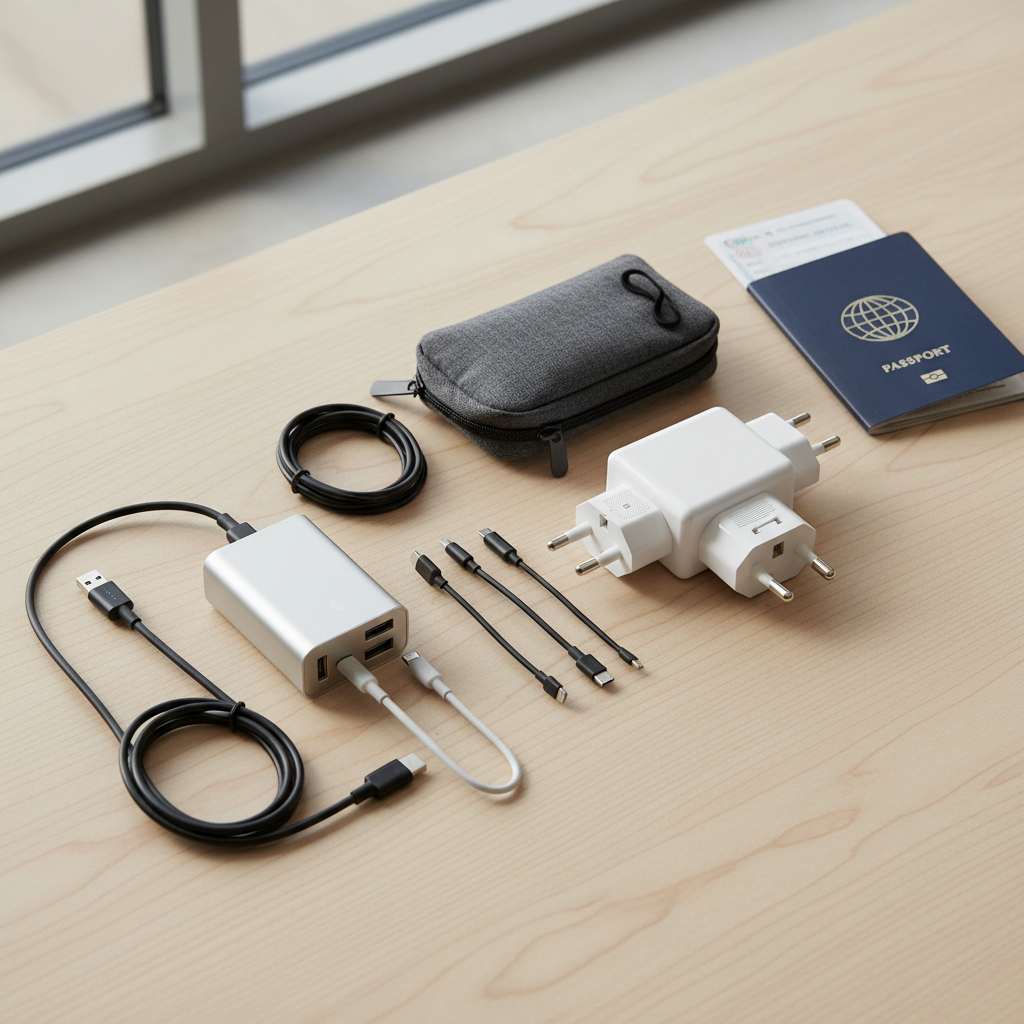
This guide breaks down what to buy, what to check before you plug anything in, and what to do when you have multiple devices and limited outlets. If you travel from the U.S., you’ll also want to think about dual voltage and USB-C PD so you don’t end up slow-charging everything overnight.
Start with the basics: plug type vs. voltage (they’re not interchangeable)
A plug adapter only changes the shape of the plug so it fits the socket. It does not change the electricity your device receives. A voltage converter changes the voltage, but you only need one in specific situations.
- U.S. power: typically 120V / 60Hz
- Many countries: typically 220–240V / 50Hz (common across Europe, much of Asia, Africa)
- Plug shapes: vary by country (Type A/B in the U.S., Type C/E/F in much of Europe, Type G in the UK, Type I in Australia, etc.)
According to the U.S. Department of State, travelers should verify local electrical current and outlet types before using appliances abroad. That’s the polite way of saying: check before you fry something expensive.
Quick self-check: what kind of traveler are you, and what do you really need?
Before you buy anything, sort your gear into two buckets. This determines whether you can use a simple adapter, or if you should plan for a converter or a different tool entirely.
Checklist (30 seconds)
- Mostly USB devices (phone, tablet, earbuds, camera batteries) and you use their wall chargers
- Laptop traveler (USB-C charging or a proprietary brick)
- High-heat appliances (hair dryer, straightener, curling iron)
- Medical or safety-critical devices (CPAP, nebulizer, specialty chargers)
- Multi-country itinerary (2+ plug types on the same trip)
If you’re in the first two buckets, many situations only require a quality plug adapter plus a good USB charger. If you’re packing high-heat appliances, voltage becomes the real story.
What to pack: the practical adapter and charger setups that work
There’s no single “best” kit, but there are a few setups that tend to work reliably for U.S. travelers.
Option A: Universal plug adapter + multi-port USB-C charger (most people)
- One universal adapter with the plug faces you need
- A USB-C PD charger (Power Delivery) with 2–4 ports, so you charge multiple devices from one outlet
- Short, durable cables (USB-C to USB-C, USB-C to Lightning if needed)
This combination keeps you flexible in older hotels where outlets are scarce, and it reduces the number of bulky “bricks” in your bag.
Option B: Country-specific adapters (simple, often sturdier)
- One small adapter per destination (for example, a Type G adapter for the UK)
- Keep your charging brick separate, so you don’t depend on a single universal mechanism
Country-specific pieces can feel boring, but they often fit recessed outlets better and wobble less, which matters when your phone hangs off the wall at an angle.
Converter or not: how to avoid damaging hair tools and other “hot” devices
The devices most likely to cause trouble are heat-based appliances. They draw high wattage, and many are not dual-voltage even if they look travel-friendly.
Here’s the rule of thumb that saves headaches: if it heats up, read the label twice.
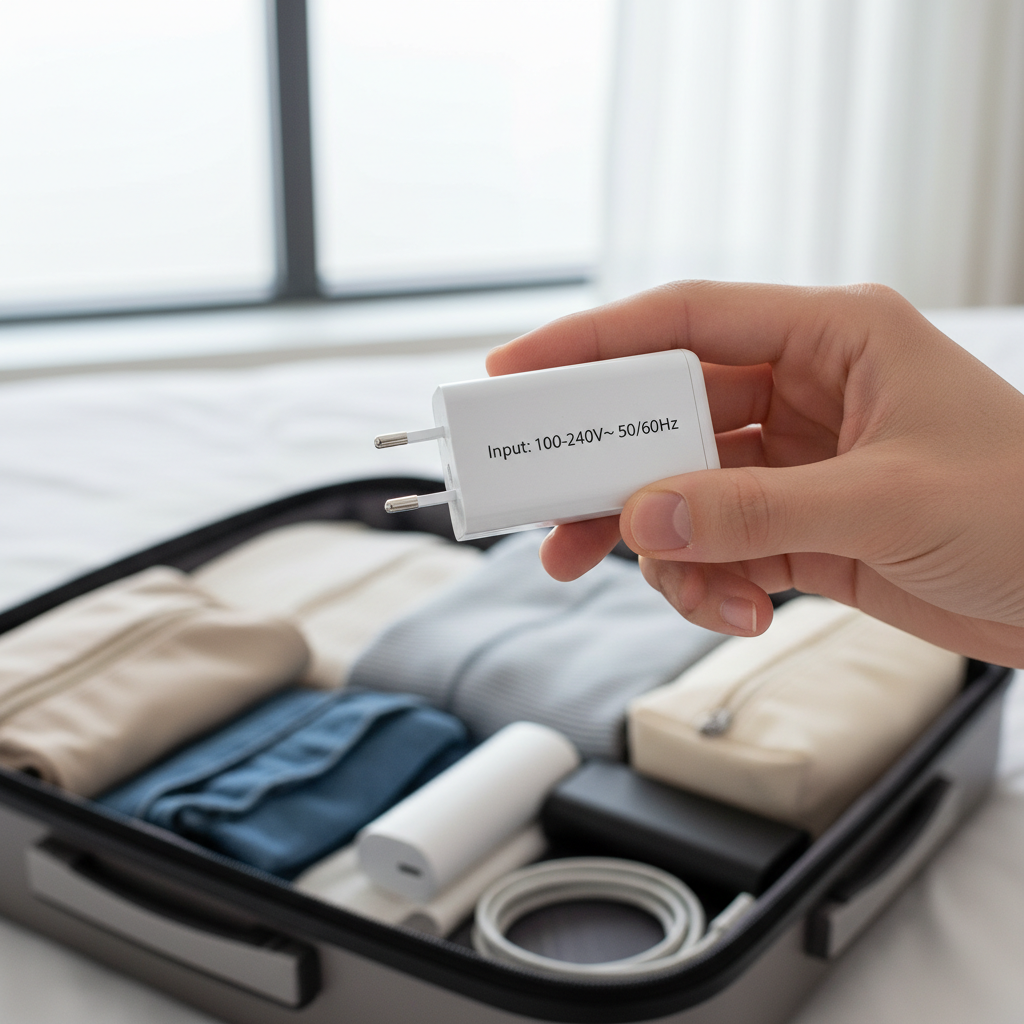
How to check: look for “Input: 100–240V, 50/60Hz” on the charger or device. If you see that range, it usually supports worldwide voltage and you only need a plug adapter. If it only shows “120V,” you’re in converter territory or you should leave it home.
- Hair dryer/straightener: often needs a true voltage converter unless it’s explicitly dual-voltage
- Electric toothbrush: many modern chargers handle 100–240V, but not all
- Shaver: frequently dual-voltage, still verify the label
If you’re unsure, using the device overseas can be risky. In that scenario, buying an inexpensive local version at your destination is sometimes the least stressful solution.
Outlet reality: hotels, airports, trains, and the “one socket for everything” problem
Even with the right plug type, outlets aren’t always convenient. Bedside sockets can be loose, some are recessed, and some airports have power strips that block chunky adapters.
Ways to make your setup more reliable
- Bring a compact USB charger with a slim profile, not a wide “wall wart”
- Add a short extension cord rated for travel use if you often stay in older hotels, this also prevents heavy chargers from hanging off the wall
- Use one charging hub so you don’t “fight” for outlets when traveling with family
- Label your cables if you share chargers, it saves time in checkout chaos
One caution: many power strips are not appropriate for international voltage, and some hotels prohibit them. If you pack one, make sure it’s rated for the voltage range you’ll encounter and fits local rules.
A simple decision table (pick what matches your gear)
If you prefer decisions you can make in a minute, this table is the fastest way to match your needs to what you pack.
| What you’re plugging in | What to check | What you likely need |
|---|---|---|
| Phone/tablet/earbuds via USB charger | Charger label shows 100–240V | Plug adapter + multi-port USB charger |
| Laptop (USB-C or brand charger) | Power brick supports 100–240V, wattage for fast charge | Plug adapter + higher-watt USB-C PD charger (or your brick) |
| Camera batteries, power bank | Input voltage on charger, airline rules for batteries | Plug adapter; keep batteries in carry-on |
| Hair dryer/straightener | Dual-voltage switch or 100–240V marking | Dual-voltage device or voltage converter, otherwise skip |
| Medical device (e.g., CPAP) | Manufacturer guidance, voltage range, plug type | Often plug adapter; confirm with provider/manufacturer |
Practical packing steps (so you don’t troubleshoot at midnight)
Power adapter travel tips are only helpful if they survive real travel, tangled cables, lost adapters, and last-minute gate changes. Here’s a packing flow that tends to hold up.
- Step 1: Look up your destination plug type and voltage, then screenshot it for offline access
- Step 2: Read labels on every charger you plan to bring, confirm 100–240V where possible
- Step 3: Choose one “primary” charger (multi-port), keep one small backup if your trip is long
- Step 4: Pack one extra cable you can live without losing, cables fail more than chargers
- Step 5: Put adapters in your carry-on, not checked luggage
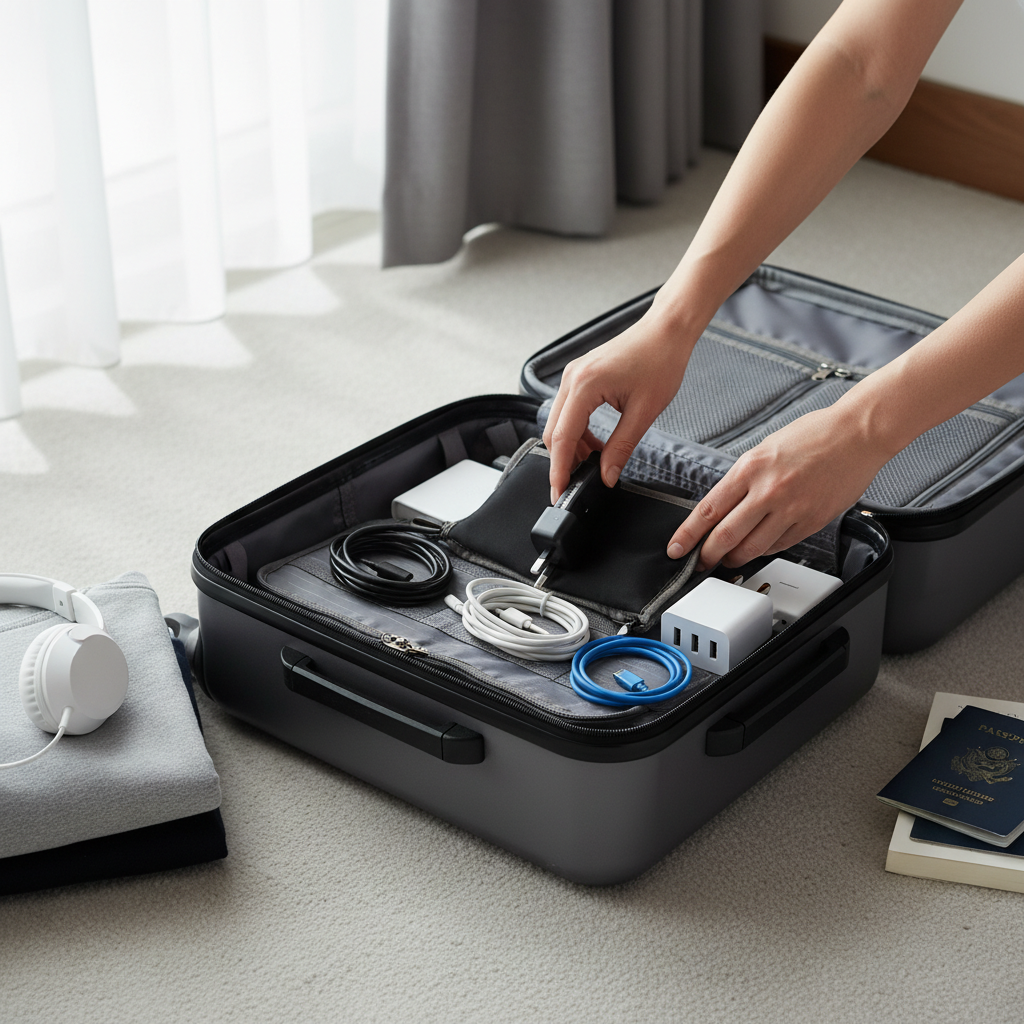
Key point: if your itinerary crosses countries, don’t rely on a single adapter that “covers everything” unless you trust the build quality. A flimsy universal adapter can become the weak link fast.
Common mistakes that waste money (or slow-charge everything)
Most problems come from a few repeat patterns. If you avoid these, you’re already ahead.
- Buying an adapter with “USB” but weak output: it may charge a phone slowly and fail with tablets
- Confusing adapter vs. converter: this is how hair tools get damaged
- Overpacking bulky bricks: one good charger plus the right plug face often replaces three separate chargers
- Ignoring wattage for laptops: a low-watt charger might maintain battery but not actually charge during use
- Assuming every hotel has modern outlets: older rooms can have loose sockets or awkward placement
When to get extra help (medical devices, expensive gear, or unusual itineraries)
If you’re traveling with medical equipment, specialty batteries, or work-critical devices, it’s worth being more conservative. Check the manufacturer manual, and if anything feels unclear, ask your healthcare provider or the device manufacturer for guidance because “it probably works” is a bad plan in this category.
According to the U.S. Transportation Security Administration (TSA), portable electronic devices and batteries have specific carry-on and screening considerations, and rules can vary by item type. If you travel internationally, your airline may also have additional requirements.
Conclusion: a calmer way to arrive with charged devices
Power adapter travel tips come down to two smart habits: confirm voltage on anything that isn’t USB-only, and build a small charging kit you can reuse trip after trip. If you do one thing today, check the input range on your chargers and pick the right plug type for your next destination, that single step prevents most “why won’t this fit” surprises.
If you’re leaving soon, pack your adapter and primary charger in your carry-on tonight, then add one backup cable. It’s a tiny action, but it removes a lot of travel friction.
FAQ
What are the most important power adapter travel tips for first-time international travelers?
Confirm the destination plug type and verify your chargers show 100–240V input. That usually means you only need a plug adapter, not a converter, for phones and laptops.
Do I need a voltage converter for Europe if I’m coming from the U.S.?
Often not for electronics, because many phone and laptop chargers accept 100–240V. You might need a converter for certain 120V-only appliances, especially heat-based tools.
Can I use a universal travel adapter for my laptop?
You can, but the more reliable approach is usually a quality USB-C PD charger or your laptop’s original power brick plus the correct plug adapter. Make sure the wattage matches what your laptop expects for normal charging.
Why is my phone charging so slowly in a hotel?
Common causes are low-output USB ports on the adapter, an old cable, or a shared charger that can’t supply enough power to multiple devices at once. A higher-quality multi-port charger often fixes this.
Is it safe to plug a U.S. power strip into an international outlet with an adapter?
It depends on the strip’s voltage rating and local hotel rules. Many basic U.S. strips are 125V-only, which may be unsafe on 230V systems, so check the label and consider a travel-rated alternative.
What plug type do I need for the UK and Ireland?
They typically use Type G outlets. If your itinerary includes the UK, add a Type G adapter even if you already own a universal adapter, Type G sockets can be picky with bulky plugs.
How many adapters should I pack for a family trip?
Usually fewer than people think. One or two plug adapters plus a strong multi-port USB charger can cover several devices, as long as you have enough cables and the charger output is adequate.
If you’re trying to streamline your setup, a small kit built around one solid multi-port charger and the right plug faces is usually the most painless approach, you pack less, charge faster, and you’re not hunting for outlets every night.