
How to fold rain jacket for small space comes down to two things: getting the air out and choosing a fold that matches how you’ll carry it, backpack, suitcase, or car door pocket. If your shell always turns into a puffy blob, it’s usually because you’re trapping air, folding against bulky seams, or rolling too loosely.
This matters more than people expect, rain jackets are slippery, lightweight, and “springy,” so a casual fold rarely stays compact once it’s jostled. And if you fold it the wrong way, you can end up with hard creases right across the waterproof coating or the zipper, which is annoying when you need it fast.
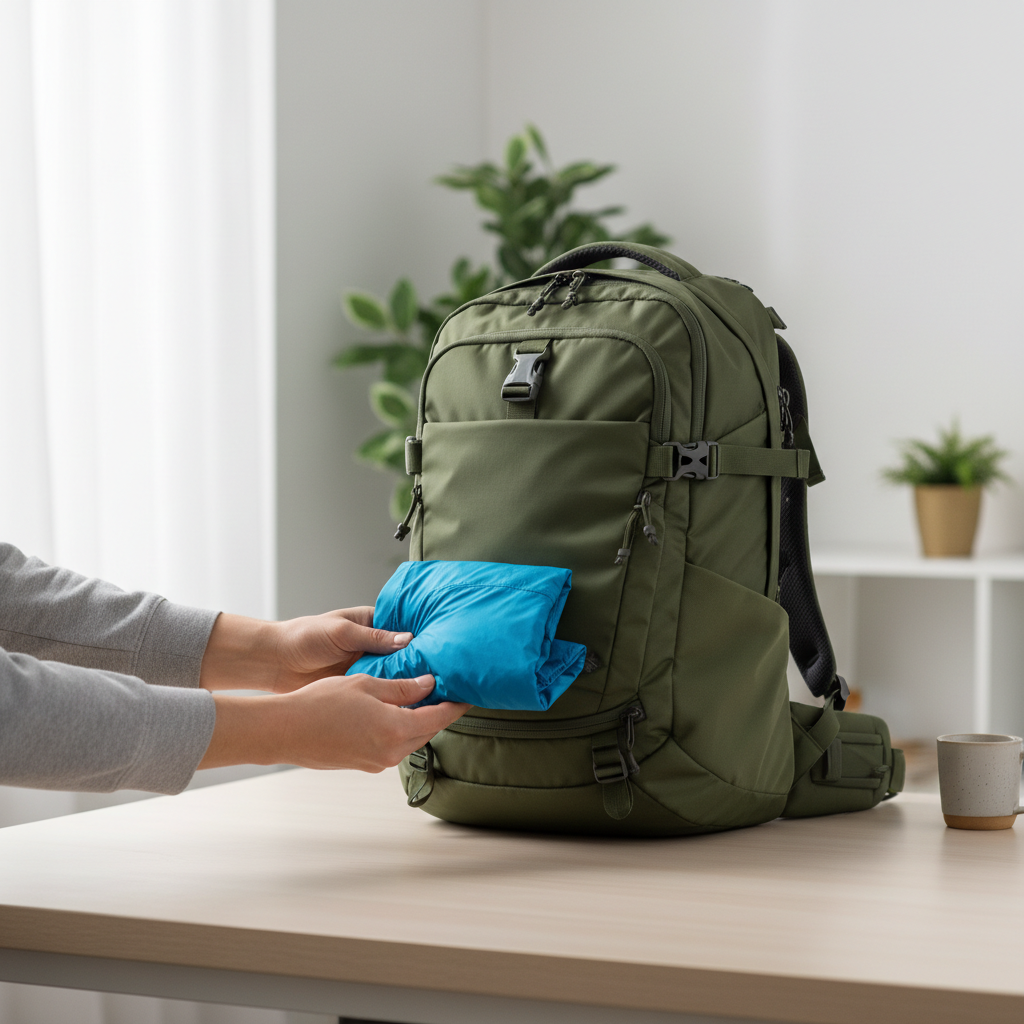
Below are three reliable folding methods, when to use each, plus a quick self-check to diagnose why your jacket won’t stay small. I’ll also cover a few fabric-care boundaries, because not every “stuff it tight” hack is worth it long term.
Why rain jackets fight you when you try to pack small
Most rain shells are designed to resist water and wind, not to fold like a soft cotton hoodie. A few practical reasons they bulk up:
- Air gets trapped between layers, especially with relaxed folds that create pockets.
- Stiff features add thickness, like brimmed hoods, storm flaps, pit zips, cord locks, and Velcro cuffs.
- Seams and zippers behave like ribs, if you fold across them randomly, the jacket “springs” back.
- DWR-coated faces can feel slick, which makes loose rolls unwind inside a bag.
According to REI, rainwear care often includes keeping items clean and dry and avoiding storage while wet, because moisture and grime can affect performance over time. That same idea applies to packing, a damp shell stuffed tight can get funky fast.
Quick self-check: which packing problem do you have?
Before you pick a method, diagnose the real issue. This takes 20 seconds and saves a lot of re-folding.
- It won’t stay rolled: you’re rolling too loose, or the hood/hem is pushing air back in.
- It becomes a hard brick: you’re folding through zipper stacks or cord locks, creating thick “spines.”
- It looks small but explodes in your bag: you’re not compressing air as you go, or there’s no strap/pocket holding it.
- It’s wrinkled in awkward places: you’re repeatedly creasing the same line, usually mid-torso or across the zipper.
Pick the fold based on your carry style: pocketable for fast access, flat fold for suitcase layers, or roll for a daypack.
Method 1: The “flat rectangle” fold (best for suitcases and tote bags)
This is the cleanest option when you want the jacket to lie flat under other items. It’s also the most forgiving if you hate wrinkles.
Steps
- Zip the jacket fully, then smooth it face-down on a flat surface.
- Fold sleeves inward along the body, aim for straight edges without stacking thick cuff Velcro on top of itself.
- Fold the hood down toward the shoulders, keep the brim or adjustment cord from creating a lump.
- Fold the bottom hem up 1/3, then fold again to match your suitcase width.
- Press down with your forearms as you fold to push air out instead of trapping it.
Where it shines: carry-on suitcases, packing cubes, work bags where you want a tidy, flat layer.
Method 2: The “tight roll” (best for backpacks and day hikes)
If you need a small cylinder you can wedge into a side pocket, rolling works, but only if you control bulk points and squeeze air out as you go.
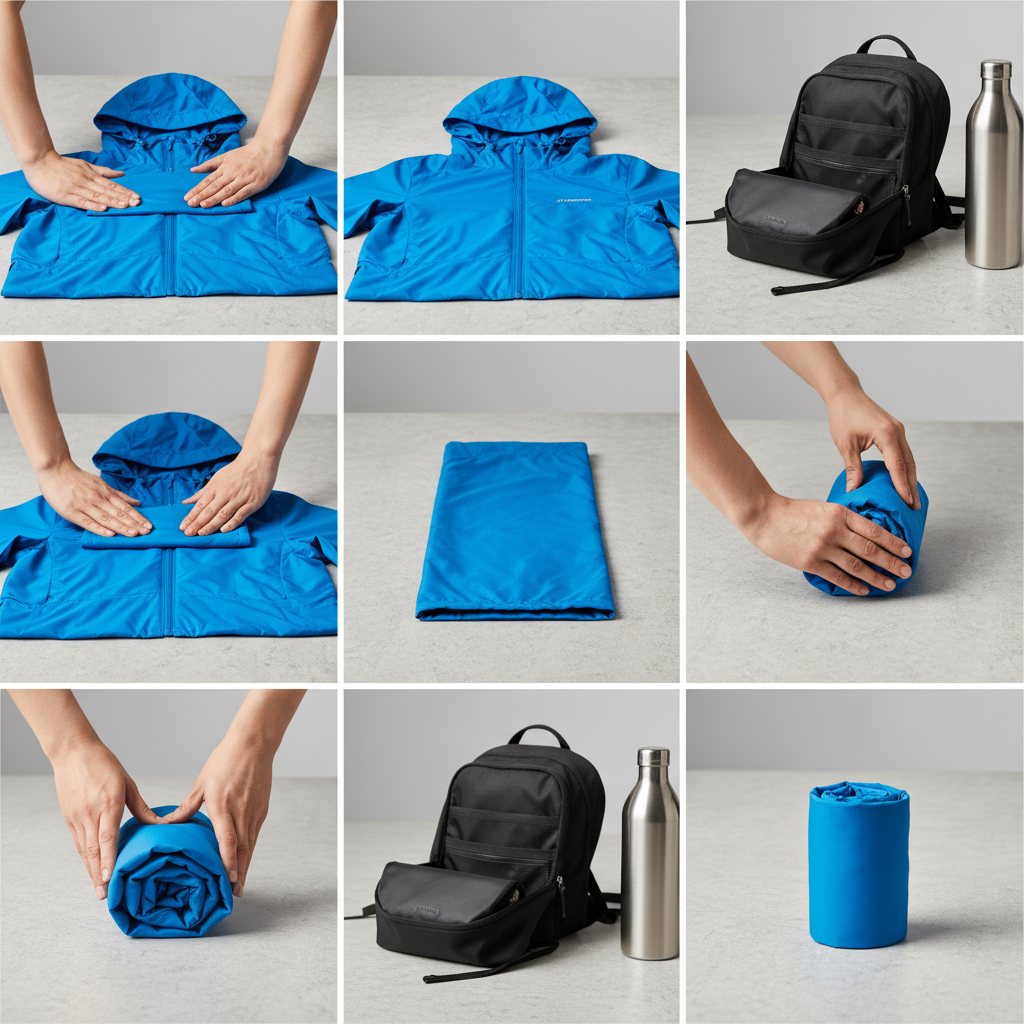
Steps
- Zip up, lay the jacket face-down, and fold sleeves inward so the body becomes a long rectangle.
- Flatten the hood so it sits inside the rectangle, not sticking out like a “cap” that adds thickness.
- Start rolling from the hood end toward the hem, roll slow and tight, pausing every couple turns to press air out.
- When you reach the hem, tuck the hem edge around the roll like a band, or secure with a small elastic strap.
Small but realistic tip: if your jacket has stiff zipper garages or cord locks, keep them off the outermost layer of the roll, otherwise the roll “walks open” in your pack.
Method 3: The “stuff-and-seal” (best for pocketable jackets or quick car storage)
Some rain shells include a stuff pocket or a built-in stow pouch. If yours does, use it, because it’s designed to hold tension and stop the bundle from expanding.
Steps
- Zip up and turn the stuff pocket inside out if required by your jacket design.
- Start with the sleeves, push them in first so they fill corners evenly.
- Feed the body in gradually, compress with your palm as you go, think “pack” rather than “cram.”
- Close the zipper or Velcro on the pouch, then squeeze once more to remove trapped air.
When it’s a bad idea: if the jacket is wet or muddy, stuffing can trap moisture and grime in the tightest spot. In that case, a looser temporary fold is safer until you can dry it.
Which fold should you use? A quick comparison table
If you’re deciding in the moment, this table is usually enough.
| Method | Best for | Space savings | Wrinkle risk | Speed |
|---|---|---|---|---|
| Flat rectangle | Suitcases, packing cubes | Medium | Low to medium | Medium |
| Tight roll | Backpacks, day hikes | High | Medium | Medium |
| Stuff-and-seal | Quick carry, car, pocketable shells | High | Medium | Fast |
Make it even smaller: practical compression tricks that don’t feel “gimmicky”
Once you’ve got the right fold, these are the little details that actually reduce volume.
- Use a thin elastic band or a gear strap to stop unrolling, it often saves more space than re-folding five times.
- Fold away from hard parts, keep zippers, toggles, and Velcro from stacking in one spot.
- Pack near the outside of your bag, a rain shell near the top/side stays accessible, and you avoid crushing it into odd shapes.
- Pair with a small pouch if your jacket lacks a stuff pocket, a lightweight zip pouch creates structure and keeps the bundle from expanding.
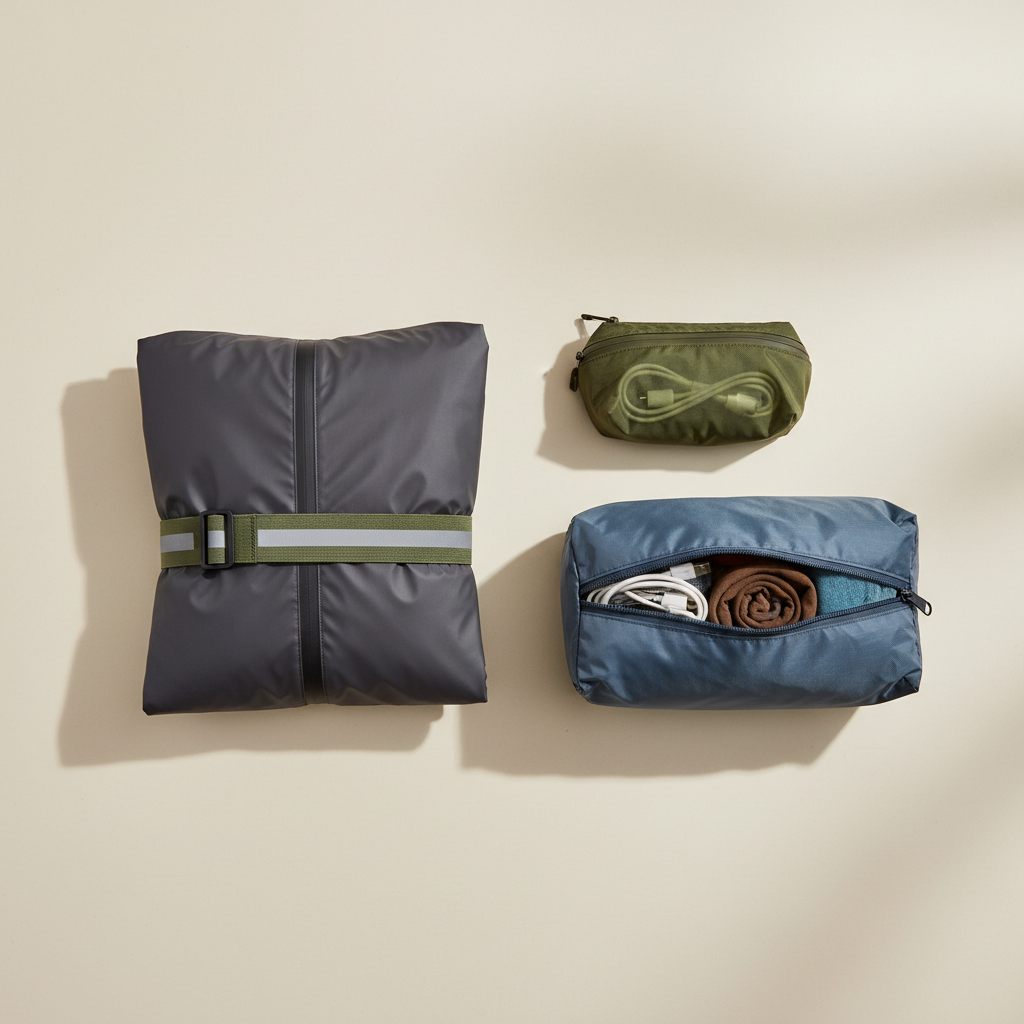
One more thing people miss: if you’re trying how to fold rain jacket for small space inside a packed suitcase, flat beats tiny a lot of the time. A super-compact ball can create dead space around it, while a flat fold fills gaps.
Common mistakes that make a rain jacket bulkier (or shorten its life)
There’s a difference between “packable” and “permanently stored in a fist-sized wad.” Many jackets tolerate rough handling, but some habits cause avoidable wear.
- Storing wet: mildew smell and fabric degradation are real possibilities, air-dry when you can.
- Cranking Velcro onto the fabric: hook-and-loop can snag face fabric and seam tape.
- Always creasing the same line: rotating fold lines reduces that sharp, permanent-looking crease.
- Over-compressing for long periods: short-term compression for travel is usually fine, but long storage in a tight sack can stress coatings and seam tape.
According to Patagonia, keeping technical outerwear clean and properly stored helps maintain performance features like water repellency and breathability. If you treat “packed” as “stored,” problems show up sooner.
When it’s worth getting help or checking the jacket itself
If your shell feels impossible to pack small, it may not be you. A few situations where a quick check or professional advice makes sense:
- Seam tape peeling or sticky interior coating, folding tightly can worsen it, consider contacting the brand or a repair shop.
- Zipper deformation: if the main zip waves or catches, avoid folding that forces a hard bend across the zipper.
- Strong odor after packing: persistent smell may mean the jacket needs cleaning and full drying; if you have sensitivities, it may help to consult a professional cleaner familiar with technical fabrics.
For day-to-day packing, you don’t need perfection, you need a fold you can repeat quickly, that keeps the jacket usable when the weather flips.
Conclusion: a small-space fold you’ll actually keep using
How to fold rain jacket for small space is less about a magic technique and more about matching the fold to your bag, pushing air out on purpose, and avoiding bulky hardware stacks. If you want one default method, use the tight roll for backpacks and the flat rectangle for suitcases, then add a simple strap so it stays put.
If you’re packing tonight, do this: pick one method above, fold once with attention to the hood and zipper, then test it by shaking your bag for five seconds, if it holds, you’re done.
Key takeaways:
- Air control matters more than perfect edges.
- Flat folds often pack better in suitcases than a tiny ball.
- Wet shells should be packed temporarily, then dried as soon as practical.
FAQ
How do I fold a rain jacket without making deep creases?
Use the flat rectangle fold and avoid folding directly across the main zipper or thick seam stacks. Rotating your fold lines also helps, don’t crease the same spot every trip.
Is rolling better than folding for saving space?
Rolling often wins in backpacks because it creates a stable shape you can wedge into corners. In a suitcase, a flat fold can be more space-efficient because it layers cleanly.
What if my rain jacket has a stiff hood that won’t fold flat?
Try folding the hood into the back panel area rather than forcing it into a sharp bend. If there’s a brim, keep it along the outside edge of the rectangle so it doesn’t create a lump in the center.
How to fold rain jacket for small space in a packing cube?
Go with the flat rectangle, then size it to the cube width and stack it as a top layer for quick access. If the cube is tight, press air out with your forearm as you make each fold.
Can I keep my rain jacket stuffed in its pocket all the time?
For short periods, many jackets handle it fine, especially if they’re designed to be pocketable. For long-term storage, it’s usually kinder to hang or fold loosely, and keep it fully dry.
Should I fold or stuff a wet rain jacket?
If you must pack it wet, a loose roll or loose fold reduces pressure on damp fabric and keeps it easier to air out later. Drying it as soon as possible is the safer move for odor and material longevity.
Why does my rolled jacket keep unrolling in my bag?
Most of the time it’s trapped air plus a slippery face fabric. Roll tighter, start from the hood end, and secure with an elastic band or strap so the outer layer can’t relax.
Lightweight next step
If you’re trying to pack lighter for travel or a small daypack and you’d rather not think about folding every time, it may help to choose a shell with a built-in stuff pocket or pair your current jacket with a simple strap and slim pouch, it turns “messy blob” into a repeatable system.