
How to wear a neck wallet discreetly comes down to two things: placement and fabric behavior, because most “fails” happen when the pouch shifts, prints through clothing, or forces you to adjust it in public.
If you travel often, commute in crowded cities, or just hate the idea of flashing a passport or cash, a neck wallet can be a quiet layer of security, but only if it stays invisible and comfortable. Otherwise it turns into that awkward bulge you keep patting, which defeats the point.
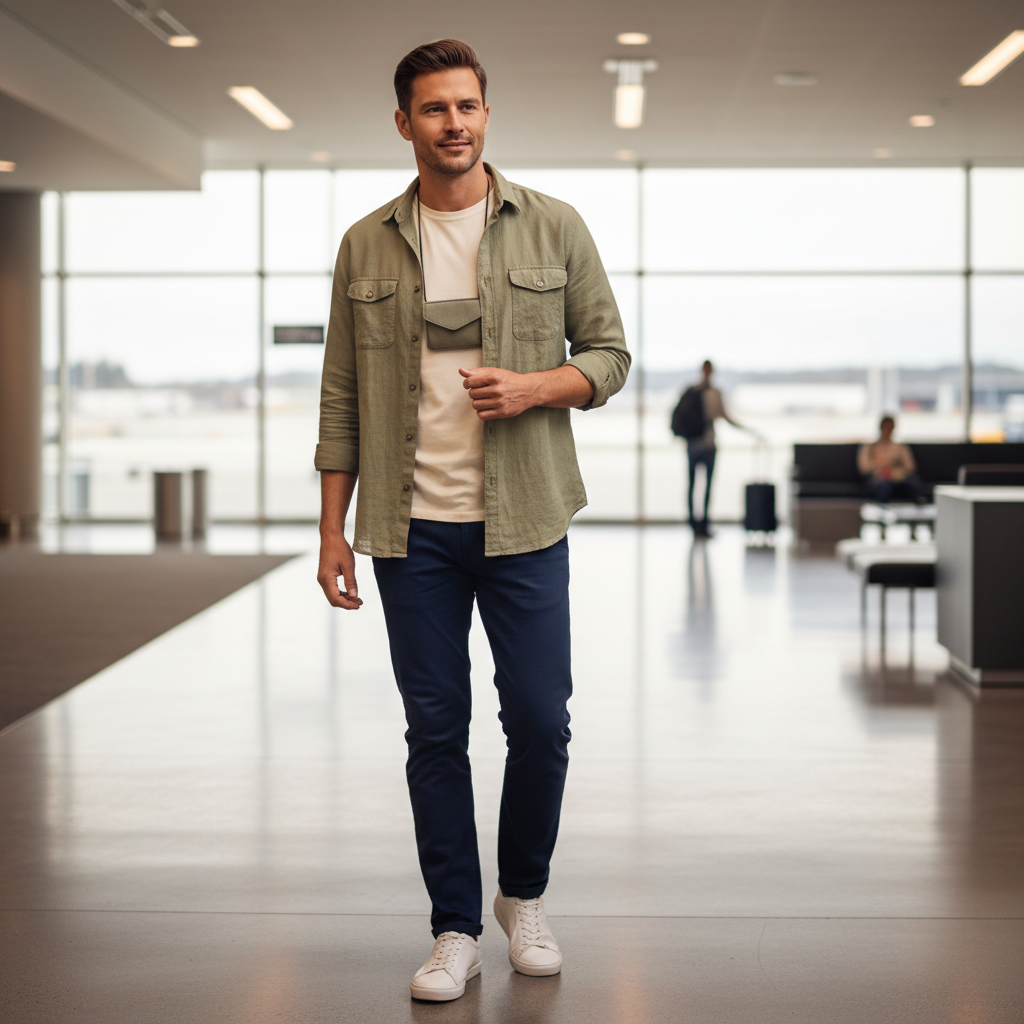
There’s also a common misconception that “under the shirt” automatically means discreet. In reality, neck wallets vary a lot in thickness, strap style, and how they sit on different bodies, so the same setup can look invisible on one person and obvious on another.
This guide focuses on what actually works in daily wear: where to position it, what to put inside, what fabrics hide it best, and how to do quick checks without looking like you’re guarding treasure.
Why neck wallets become visible (and what that tells you)
Most visibility issues trace back to a few predictable patterns. When you recognize them, the fix becomes practical instead of guesswork.
- Overstuffing: coins, thick key fobs, stacks of cards, and folded passports create a rigid block that prints through fabric.
- Wrong ride height: if the pouch sits high on the sternum, it catches light and movement, especially under thin shirts.
- Strap tension mismatch: too tight pulls the pouch outward, too loose makes it swing and shift when you walk.
- Shirt fabric too clingy: athletic knits and thin cotton often outline edges, even if the wallet is slim.
- Behavior tells on you: frequent patting, adjusting, or checking draws more attention than a slight outline.
According to TSA, travelers can keep certain valuables on their person, but screening still varies by checkpoint and officer discretion, so build a setup that’s easy to remove if needed and doesn’t create a bottleneck at security.
A quick self-check: will your setup stay discreet?
Before you head out, do a 60-second test at home. It saves you from discovering problems under harsh daylight or in a crowded line.
The mirror and movement check
- Stand naturally, then twist left/right, reach up, and sit down.
- Look for hard corners (passport edges), strap lines, and any “tenting” where fabric lifts.
- If you can spot it in normal room light, it will usually show more outdoors.
The “one-adjustment rule”
If you feel you’ll need to adjust more than once every hour, change something now. Discreet carry is as much about not touching it as it is about hiding it.
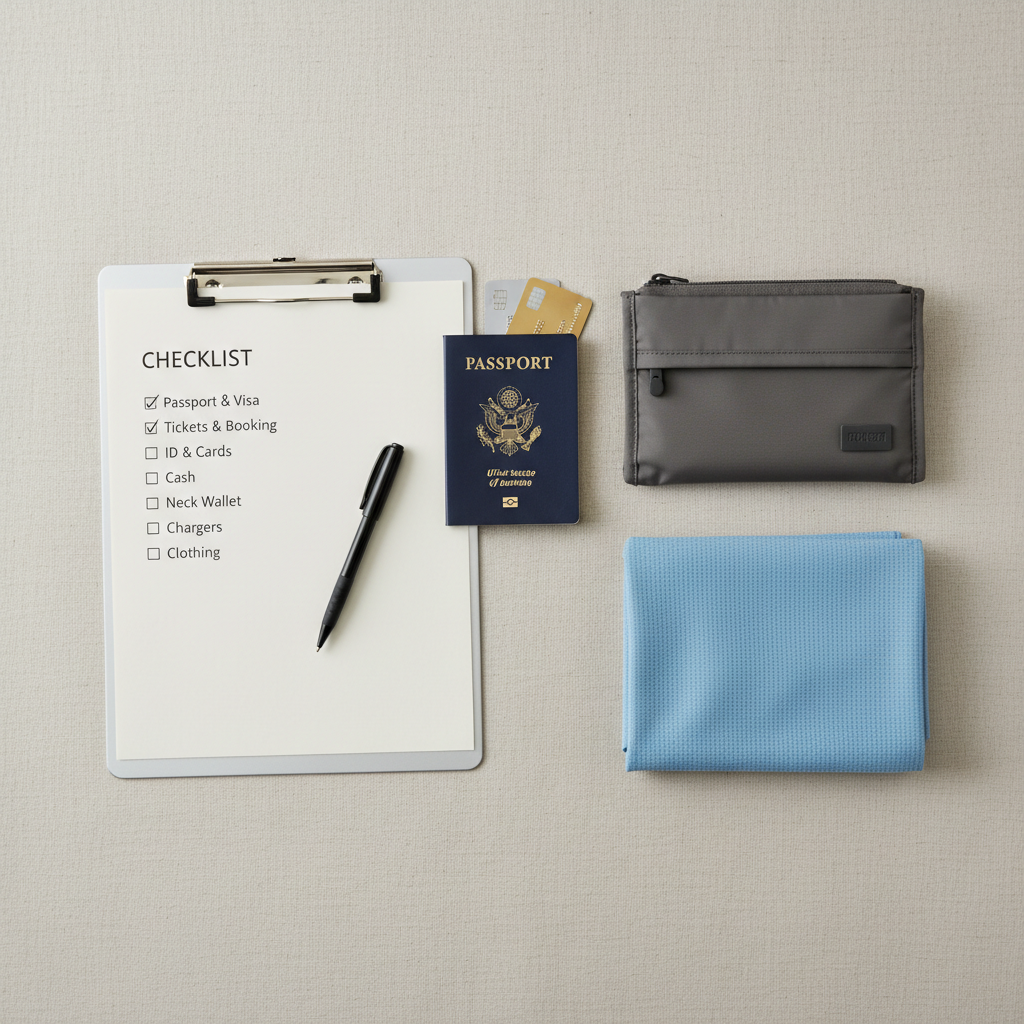
What you carry matters more than you think
A neck wallet works best when it stays flat. If you need a mini organizer with bulky items, that’s usually a sign you should split carry between pockets, a money belt, or a day bag.
Best placement: where to wear it under clothing
How to wear a neck wallet discreetly is easier when you choose a consistent “parking spot” on your torso. Constant repositioning is where most people get annoyed and give up.
Default placement that hides well for most outfits
- Center chest, slightly lower than sternum: often hides better than high chest because fabric drapes more naturally.
- Off-center under the pec/upper chest: can reduce the “badge” look under thin shirts, especially for slim wallets.
- Under an undershirt: undershirt first, neck wallet second, outer shirt third, this adds friction so it shifts less.
When you should avoid “high and tight”
If you’re wearing a fitted tee, the high placement tends to outline the pouch edges and the strap can telegraph around the neck. In that case, lowering the pouch and loosening the strap slightly often looks better.
Outfit choices that reduce printing (without buying a new wardrobe)
You don’t need “anti-theft fashion” to keep a neck wallet low-profile, but you do need to understand what fabrics do.
- Better camouflage: structured button-downs, thicker cotton, flannels, light jackets, overshirts, hoodies.
- More likely to show outlines: thin modal tees, compression/athletic knits, silky tops, clingy base layers.
- Patterns help: plaids, heathers, and textures break up edges better than solid, smooth fabric.
If you want a simple rule: a bit of drape beats tight fit, and texture beats smooth.
What to put inside (and what to keep elsewhere)
A discreet neck wallet is usually a “core documents” carrier, not a full wallet replacement. Keeping it minimal also improves comfort, especially in heat.
Low-bulk loadout that works in many cases
- Passport or ID (one primary document)
- 1–2 payment cards
- A small amount of folded cash
- Optional: a paper backup with emergency contact info
Items that commonly ruin discretion
- Coins
- Large key rings
- Too many cards stacked together
- Thick boarding pass bundles, receipts, souvenirs
Practical scenarios: discreet setups that match the moment
“Right” depends on where you are and what you need access to. A setup that hides perfectly on a walking day can be annoying at a restaurant, or at airport screening.
Airport and transit days
- Wear it under an undershirt and looser top, keep contents thin.
- Before security, move items you must present into an easy pocket or a small pouch, so you’re not fishing under your shirt at the podium.
- After screening, reset it in a calm spot, not while walking in a crowd.
City walking and crowded attractions
- Use the one-adjustment rule and keep it flat.
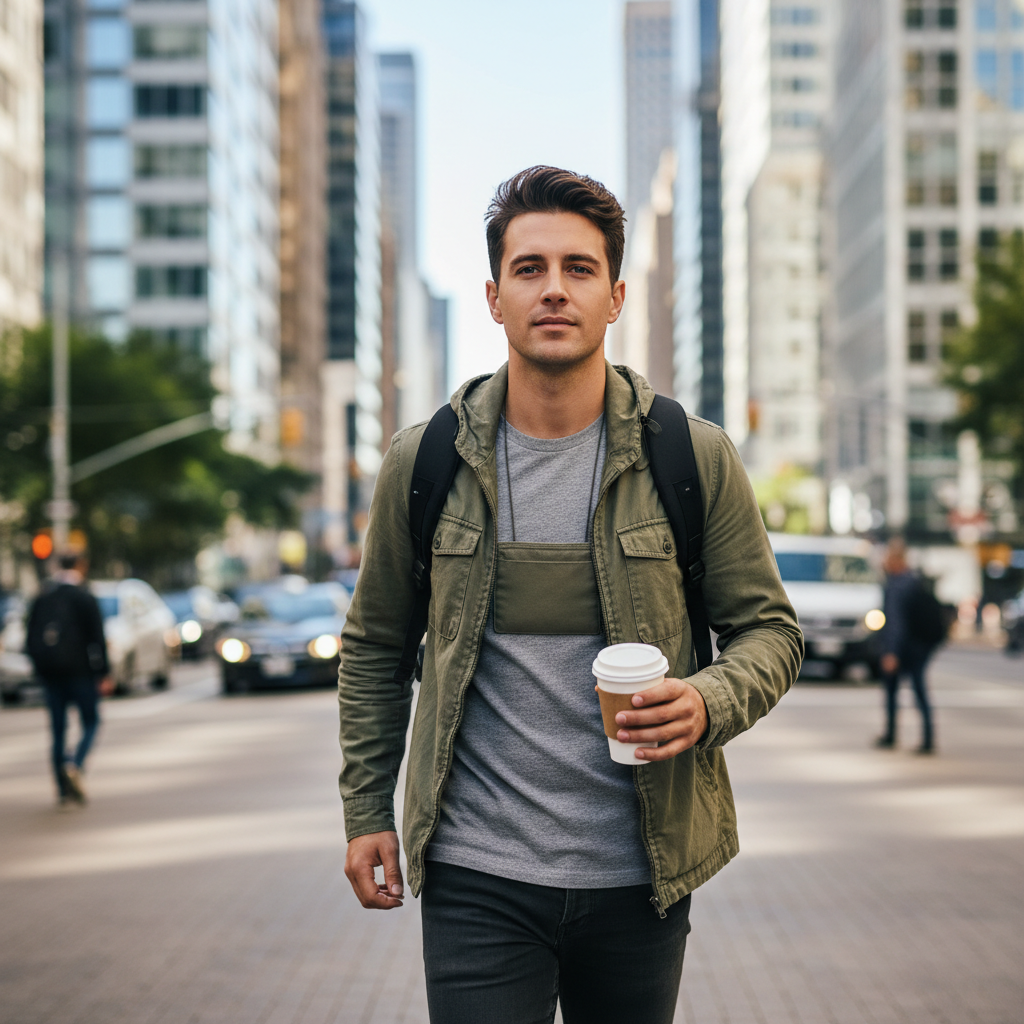
- Pair with an overshirt or light jacket when possible, it’s an easy conceal layer.
- Practice a “no-touch” habit; check in private spaces instead of on the sidewalk.
Restaurants, museums, and indoor venues
- If you’ll sit for long periods, lower the pouch slightly to reduce pressure points.
- Bring a “decoy” wallet with a small amount of cash and an old card, so you avoid exposing the neck wallet when paying.
Comfort and discretion trade-offs (use this table)
Sometimes the most discreet setup feels annoying after three hours. This quick table helps you pick a compromise that still works.
| Choice | More discreet when… | More comfortable when… |
|---|---|---|
| Higher placement | Outer layer is structured (jacket/overshirt) | You need quick access without bending |
| Lower placement | Shirt drapes and you move a lot | You sit often and want less chest pressure |
| Tighter strap | You want less swinging while walking | You tolerate snug fit without chafing |
| Looser strap | You wear thicker layers that stabilize it | You want easier breathing and less friction |
| Under undershirt | You need maximum concealment | You can handle extra warmth |
Common mistakes that make you look “targeted”
Even a perfectly hidden pouch can become obvious if your behavior signals “valuables here.” This part sounds harsh, but it’s the difference between discreet and suspicious.
- Adjusting in public: step into a restroom or quiet corner if you must reposition.
- Showing the strap at the neckline: if it peeks out, it becomes a visual cue.
- Accessing it at the counter: paying, showing ID, or counting cash from under your shirt draws eyes fast.
- Stuffing it “just for today”: that’s usually the day it prints in photos.
According to the U.S. Department of State, travelers should use layered strategies for safeguarding valuables, which generally means not relying on a single method and keeping backups in separate places.
When to get help or switch strategies
If you experience skin irritation, breathing discomfort, or anxiety about constant checking, it may be better to change carry style rather than forcing it. People with certain medical conditions or sensory sensitivities might prefer a different option, and if you’re unsure, it’s reasonable to consult a medical professional.
It’s also worth switching strategies if your clothing or work environment makes concealment unrealistic, for example fitted uniforms, thin performance fabric, or situations where you must remove layers often.
Key takeaways and a simple action plan
If you want the “do this next” version, keep it simple.
- Go flat: passport, 1–2 cards, a little cash, nothing bulky.
- Pick one placement: center-lower chest or slightly off-center, then stop fiddling.
- Dress for drape: texture and structure hide edges better than thin, clingy shirts.
- Plan access: move what you’ll present into a pocket before you reach the counter.
Try your setup at home with the mirror and movement check, then do a short “test walk” outside. Small tweaks to strap tension and loadout usually solve what feels like a big visibility problem.
FAQ
How do I wear a neck wallet under a T-shirt without it showing?
Keep the contents thin and lower the pouch slightly so the shirt can drape. If the tee is fitted or clingy, adding an undershirt or switching to a thicker fabric often makes a bigger difference than repositioning.
Should a neck wallet sit on my chest or stomach?
Chest placement tends to be easier to manage, but “mid-chest and a bit lower” often hides better than high sternum. Stomach placement can work under looser layers, though it may shift more when you walk.
Is it better to wear a neck wallet over or under an undershirt?
Under an undershirt usually feels cooler and easier to access, but it can shift. Over an undershirt (between undershirt and outer shirt) often stays put and looks smoother, at the cost of slightly more warmth.
Can I keep my phone in a neck wallet discreetly?
Many phones add thickness and sharp edges, so printing becomes likely, especially under thin shirts. If you must carry a phone close, a slim crossbody or inside jacket pocket often looks less conspicuous.
How do I stop a neck wallet from bouncing when I walk?
Shorten the strap a bit and reduce weight inside. Wearing it over an undershirt also adds friction, which helps prevent swing without making the strap uncomfortably tight.
Will a neck wallet set off metal detectors or cause issues at airport security?
It depends on the materials and the checkpoint process, so plan to remove it if asked. The smoother approach is to move ID and boarding pass into an easy-access pocket before screening, then reset afterward.
What’s the most discreet alternative if a neck wallet keeps printing?
A money belt, a hidden pocket in a jacket, or splitting essentials between a decoy wallet and a secure internal pocket often looks more natural than forcing a bulky neck wallet under a fitted top.
If you’re trying to build a low-profile travel setup and still can’t get the fit right, it may help to choose a slimmer neck wallet style and treat it as “documents only,” then pair it with a normal wallet for daily spending, it’s usually the combo that feels both discreet and realistic.