
travel lock luggage safe is usually the simplest upgrade you can make when you want your bag to stay closed, discourage casual theft, and reduce that nagging “did someone open it” feeling during transit.
That said, locks are not magic. Airports, hotel staff, shared shuttles, cruise terminals, and even your own trunk create different risk levels, and the “right” lock depends on where your luggage spends its time and how it gets handled.
This guide breaks down what travel locks actually protect against, what they don’t, how TSA locks fit into US travel, and how to set up your bag so the lock helps rather than turns into one more travel headache.
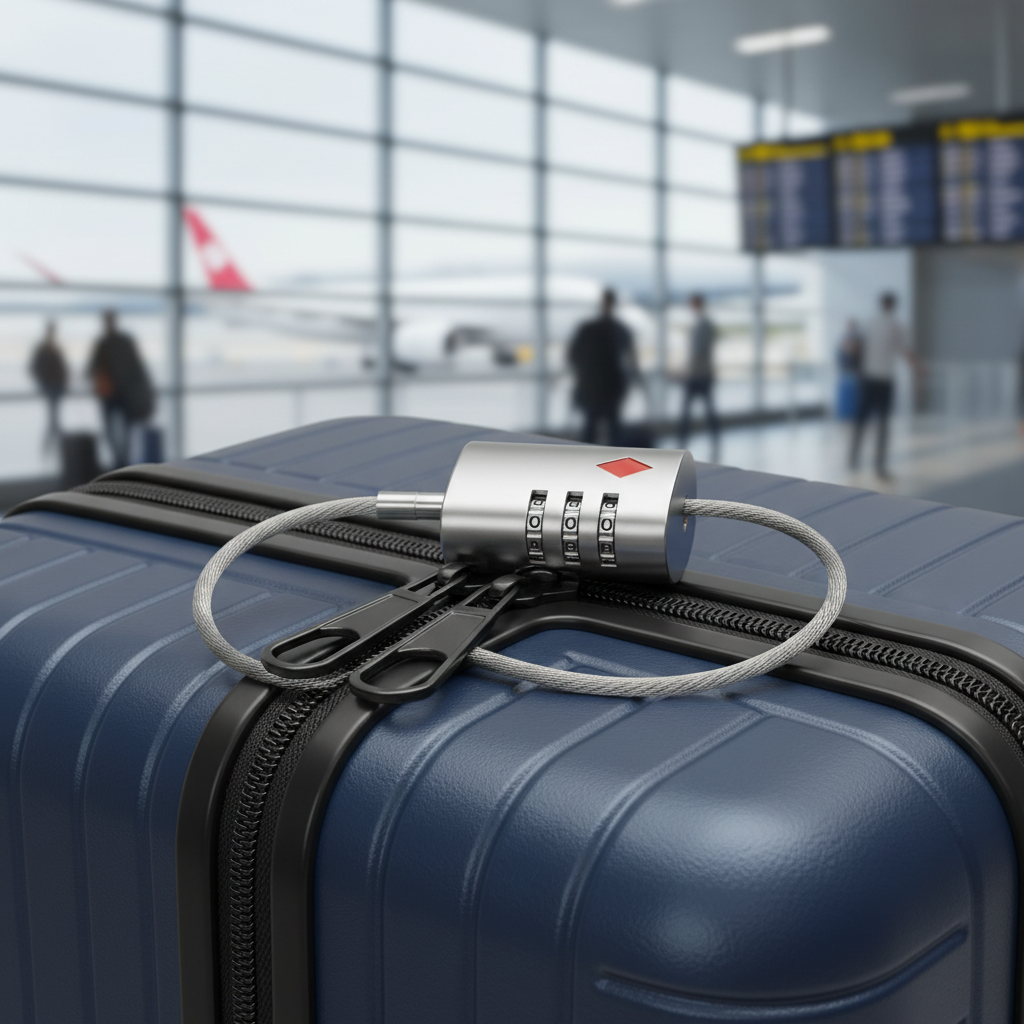
What a travel lock can (and can’t) do for luggage safety
A travel lock is mostly about deterrence and tamper evidence. It can stop quick “zip-and-grab” behavior, keep zippers from creeping open, and signal that someone had to work to access the bag.
But it rarely prevents determined theft. Many suitcases can be cut, pried, or forced open without touching the lock, especially soft-sided bags. If you travel with high-value items, your strategy should be “lock + placement + backup,” not just “lock.”
- Helps with: casual pilfering, zipper popping, accidental opening, hostel lockers, shared baggage rooms
- Less helpful for: checked-bag theft by force, knife cuts on fabric, lost luggage, situations where the entire bag is taken
According to the Transportation Security Administration (TSA), security officers may need to open checked baggage during screening, which is why lock choice matters when you check a bag.
Choosing a lock type: combination, key, cable, and smart
Most travelers end up choosing between combination locks and key locks. Combination models avoid the “where’s the key” problem, while key locks can be faster when you’re moving through a line or opening your bag often.
Quick pros/cons
- 3-dial combination: easy, affordable, decent for light deterrence, but can be fiddly in low light
- Key lock: quick to open, but losing a key is a real trip-killer, spares help
- Cable lock: more flexible, useful for awkward zipper positions and duffels
- Smart/Bluetooth lock: convenient for some, but battery/app issues can be a weak point
If your main goal is “keep my zippers together and show tampering,” a simple TSA combination lock is often enough. If you’re locking to a fixed object, cable matters more than dial style.
TSA locks in the US: when they matter and when they don’t
If you check luggage in the US, a TSA-accepted lock is usually the least frustrating option. It allows TSA officers to open the bag with a master key if screening requires it, then re-lock it.
Non-TSA locks can still be used, but the practical tradeoff is simple: if inspection is needed, the lock might be cut. That doesn’t happen every trip, but it’s common enough that many frequent flyers avoid the risk.
- Carry-on only: TSA feature matters less, you control the bag
- Checked bag: TSA-accepted is typically the safer bet for the lock itself
- International connections: rules vary by country and airport, TSA marking mainly targets US screening
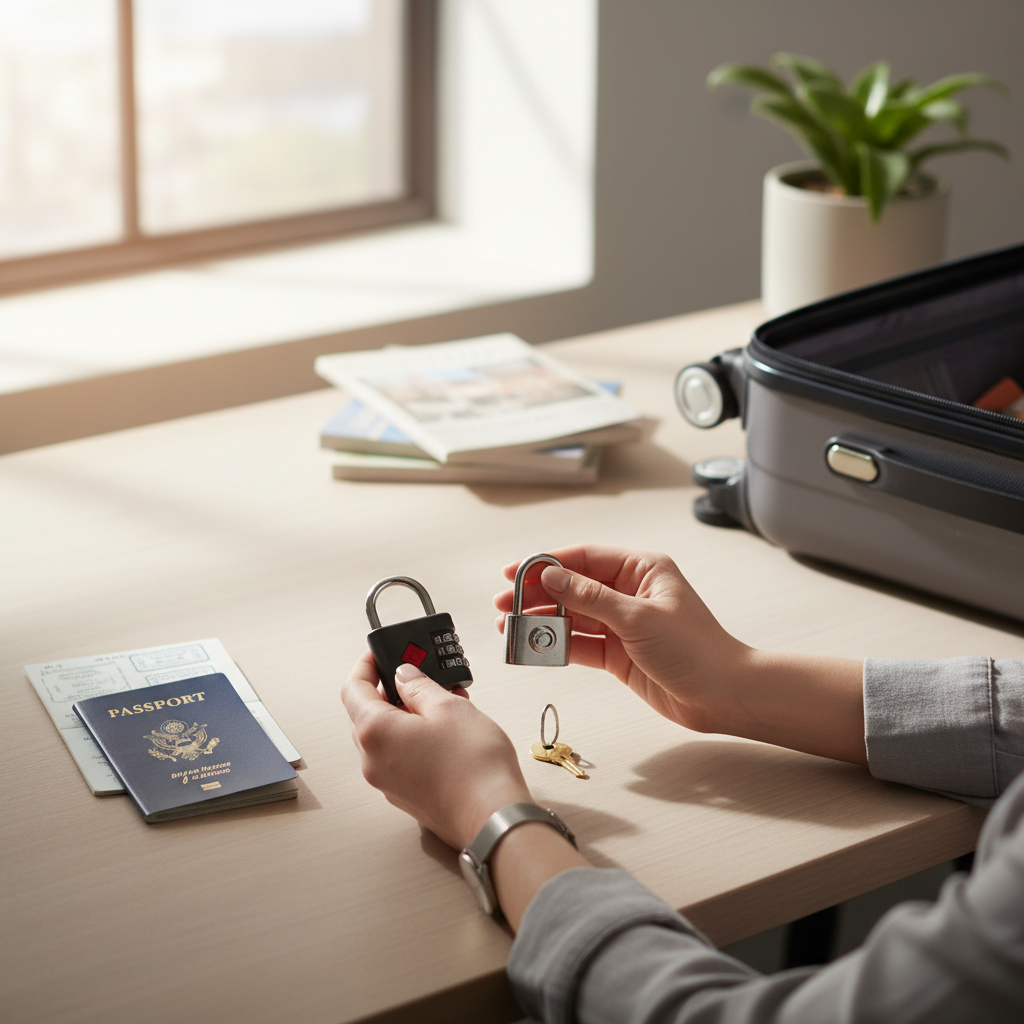
Self-check: what level of “safe storage” do you actually need?
People buy locks for different reasons, then feel disappointed when the lock doesn’t solve a different problem. This checklist helps you match the lock to the real scenario.
- You mostly need zipper control if your bag tends to bulge, overpack, or pop open in transit.
- You need tamper evidence if your bag sits out of sight in group transport, cruise terminals, or hotel storage rooms.
- You need theft deterrence if you’re in high-traffic areas and your bag is exposed for long stretches.
- You need “lock to something” security if you store a bag in a shared dorm/hostel, on a train rack, or in an event coat check area.
- You should rethink valuables if you’re trying to secure laptops, jewelry, or critical meds inside checked luggage.
If you checked three or more boxes, the lock is only part of the system. You’ll get better results by pairing a lock with smart packing choices and a backup plan.
How to use a travel lock on luggage, step by step (real-world setup)
Most “my lock didn’t help” stories come down to setup. Zippers not aligned, lock attached to the wrong point, or the bag itself being easy to cut makes the lock almost symbolic.
For standard zipper suitcases
- Close the bag fully, then pull both zipper sliders to the same corner so they’re easier to secure.
- Thread the lock through both zipper pulls, not just one, so the bag can’t be opened from the other side.
- Test by tugging the zippers apart gently, if you can separate them, reposition.
- Take a quick photo of your lock setup before check-in, it helps if you need to describe damage later.
For duffels and backpacks
- Use a cable-style lock to catch multiple zipper pulls and awkward loops.
- Avoid thin fabric loops as anchor points, they can tear. Look for metal rings or reinforced tabs.
- If the bag has external compression straps, tighten them after locking to reduce access gaps.
When you’re aiming for travel lock luggage safe packing, don’t forget the “inside.” Put small valuables in a pouch near the center of the bag, not right behind an outer panel.
Comparison table: which lock fits which travel scenario?
Here’s a practical way to choose without overthinking specs that don’t change day-to-day outcomes.
| Scenario | Recommended lock | Why it works | Watch-outs |
|---|---|---|---|
| Checked suitcase (US domestic) | TSA-accepted combination | Less chance of cut lock during inspection | Won’t stop forceful entry |
| Carry-on only | Small combo or key lock | You control access most of the time | Don’t slow yourself at security |
| Hostel locker / shared storage | Sturdy key lock or combo + short shackle | Fits locker hasps better | Check hasp diameter before buying |
| Train luggage rack | Cable lock | Can loop bag to fixed object | Cables can still be cut |
| Family trip with multiple bags | Color-coded combo locks | Less key chaos, easier bag ID | Share combos securely |
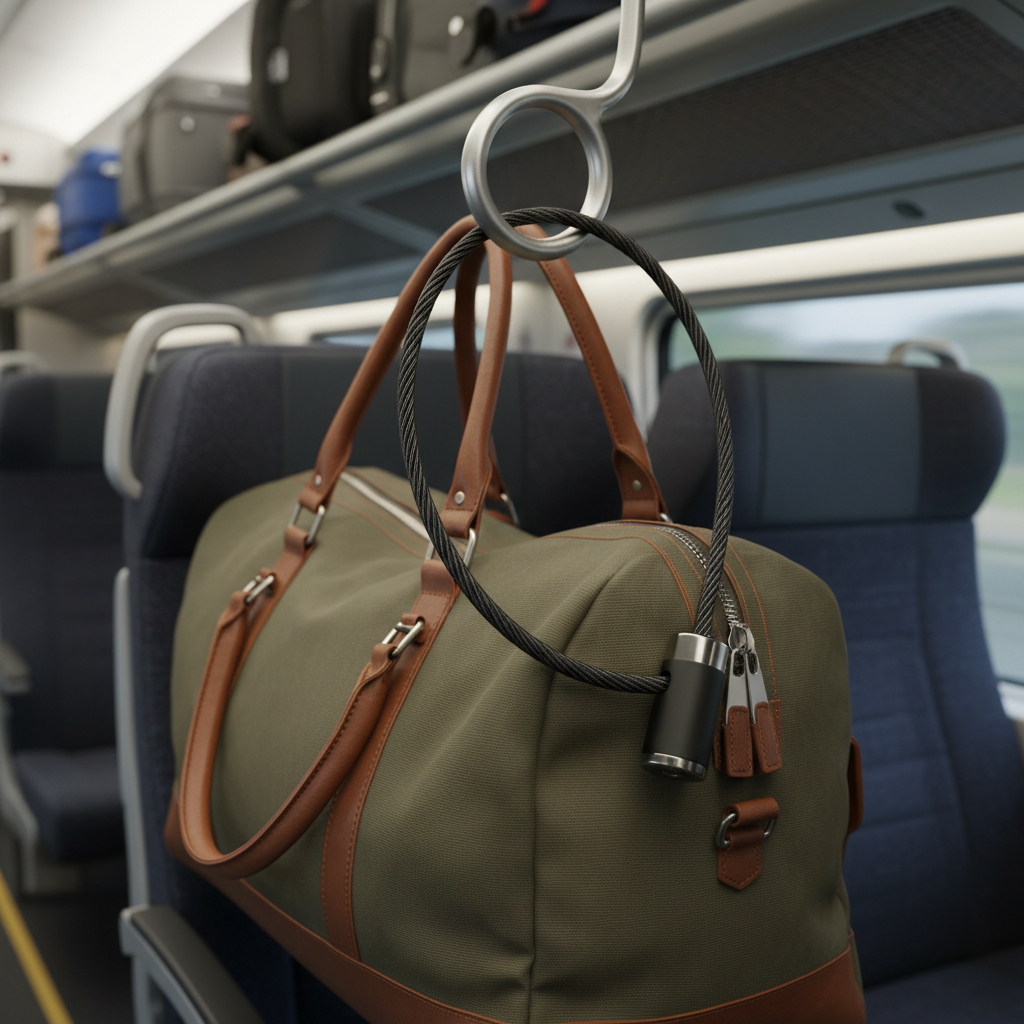
Common mistakes that make locks less effective
Locks fail quietly. Not because the lock is “bad,” but because the way it’s used leaves easy workarounds.
- Locking only one zipper pull: the other slider becomes the opening.
- Using a long shackle on soft luggage: creates space to pry or slip a pen through zipper coils.
- Setting a combo you’ll forget: people default to birthdays, which are easier to guess than they think.
- Relying on the lock for high-value items: a lock is not a safe, especially for checked baggage.
- Ignoring bag structure: if the suitcase shell or fabric is weak, the lock is not the limiting factor.
If you want travel lock luggage safe outcomes, the “boring” habits matter: keep receipts for expensive items, use AirTag-style trackers if you already own them, and keep essentials in carry-on when possible.
When to consider professional help or extra steps
If you’re traveling with regulated items, specialized gear, or high-value inventory for work, it’s worth getting advice tailored to your situation. A travel lock might be part of compliance, insurance, or chain-of-custody needs.
- Firearms or restricted items: follow airline and TSA rules closely, and consider speaking with the airline ahead of time.
- Medical devices and medication: keep critical items with you when allowed, for complex needs ask a medical professional about travel planning.
- Business samples or trade show materials: consider hardened cases, tamper seals, and documented packing photos.
According to the TSA, travelers should check current guidance before flying because screening procedures and policies can change, especially across airports and trip types.
Conclusion: a lock helps most when it matches the trip
Travel locks work best when you treat them as a practical layer, not a guarantee. Pick a lock that fits your bag hardware, choose TSA-accepted models for checked luggage in the US, and set it up so both zipper pulls are truly secured.
If you want one simple next step, do this: test your lock at home with a fully packed bag, then decide if you need a different style like a cable. That small rehearsal usually prevents the annoying surprises mid-trip.
FAQ
What is the safest travel lock for luggage?
“Safest” depends on the threat. For most people, a TSA-accepted combination lock offers reasonable deterrence and fewer issues with inspections. If you need to attach the bag to something, a cable lock is often more useful than a heavier dial lock.
Are TSA locks actually secure, or can anyone open them?
TSA locks are designed to be opened by TSA with a master key. That doesn’t mean “anyone” can open them easily, but it does mean they’re not meant as high-security locks. Think of them as travel-friendly deterrents rather than vault hardware.
Should I lock checked luggage on domestic US flights?
Many travelers do, mainly to discourage casual access and keep zippers from sliding open. If you lock checked bags, TSA-accepted models reduce the chance of the lock being cut when inspection is needed.
Can a travel lock prevent zipper tampering with a pen trick?
Sometimes, but not reliably on soft-sided luggage. A lock can keep pulls together, yet a zipper coil may still be forced open and re-zipped. Using internal packing cubes and placing valuables away from outer panels helps reduce impact if tampering happens.
Is a key lock or combination lock better for frequent travel?
Combination locks usually win for convenience because you don’t manage keys across multiple bags. Key locks can be faster in daily use, but you’ll want a spare key stored separately to avoid getting stuck.
How do I remember my luggage lock combination without writing it on the lock?
Use a code you can reconstruct, not a birthday. Some people store it in a password manager as a note. If you write it down, keep it in your phone or wallet, not attached to the suitcase.
What else should I do besides using a travel lock?
Prioritize essentials in carry-on, keep valuables toward the center of the bag, and take quick packing photos in case you need to report damage or loss. A tracker can help with location, but it doesn’t replace a lock’s deterrence.
If you’re trying to build a travel lock luggage safe setup for a specific trip type, like frequent checked bags, hostels, or train travel, it can help to choose your lock only after you’ve looked at your bag’s zipper pulls and anchor points. If you want a more hands-off approach, bring one TSA combination lock plus one short cable lock, that small “two-lock kit” covers most real-world scenarios without overcomplicating packing.