
language travel phrases basic are what keep small moments on a trip from turning into big headaches, ordering food, finding a bathroom, asking for directions, or explaining a problem when you feel rushed.
A phrasebook isn’t about sounding fluent, it’s about getting understood. When you have a few reliable lines and the confidence to repeat them slowly, you spend less time guessing and more time actually enjoying the place you came to see.
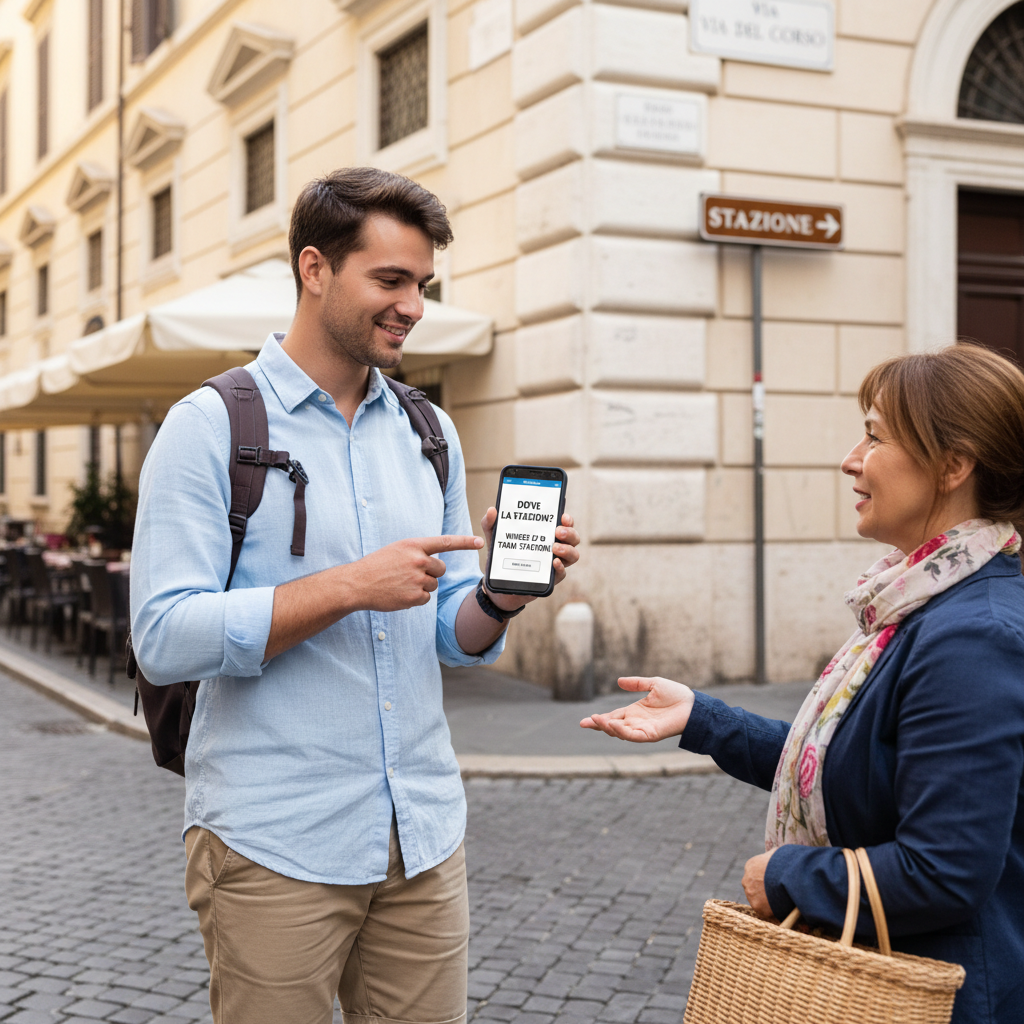
One common misunderstanding is thinking you need “perfect grammar.” In real life, most locals respond well to clarity and courtesy. This guide focuses on phrases you can actually say under pressure, plus a simple way to customize them for your destination.
What most tourists get stuck on (and why)
The hard part usually isn’t vocabulary, it’s the situation: noise, accents, stress, and time pressure. A few patterns show up again and again.
- You can’t start the conversation. You know what you want, but not how to open politely, so you freeze.
- You’re missing “repair” phrases. Not having “Please repeat” or “I don’t understand” makes every exchange fragile.
- You rely on translation apps too late. When you’re already at the counter or in a taxi, you need short, spoken lines, not paragraphs.
- You don’t have numbers ready. Prices, times, room numbers, quantities, these cause more confusion than you’d expect.
According to U.S. Department of State (travel guidance), travelers should plan ahead for communication needs and emergencies. Phrases for help, location, and medical concerns belong in the “pack it before you need it” category.
A quick self-check: which travel scenarios matter most for you?
Pick the situations you’re most likely to face. This helps you memorize fewer phrases, but the right ones.
- City exploring: directions, transit, tickets, opening hours
- Food-focused trip: ordering, allergies, reservations, paying
- Solo travel: safety check-ins, boundaries, asking for help
- Family travel: bathrooms, kid needs, lost items, pharmacy
- Business travel: meetings, hotels, receipts, Wi‑Fi
If you choose just two scenarios, you can build a mini “script” that covers 80% of what you’ll say. The rest can be handled with pointing, numbers, and a translation app.
Core language travel phrases (basic) you’ll actually use
Think in modules: start polite, state your need, confirm details, and close the interaction. Keep sentences short and repeatable.
Polite openers and courtesy
- Hello / Good morning / Good evening
- Please
- Thank you
- Excuse me (to get attention or pass by)
- Sorry (when you bump someone or interrupt)
When you don’t understand (repair phrases)
- I’m sorry, I don’t understand.
- Could you repeat that, please?
- Could you speak more slowly?
- Can you show me? (often faster than words)
- Do you speak English? (say it kindly, not loudly)
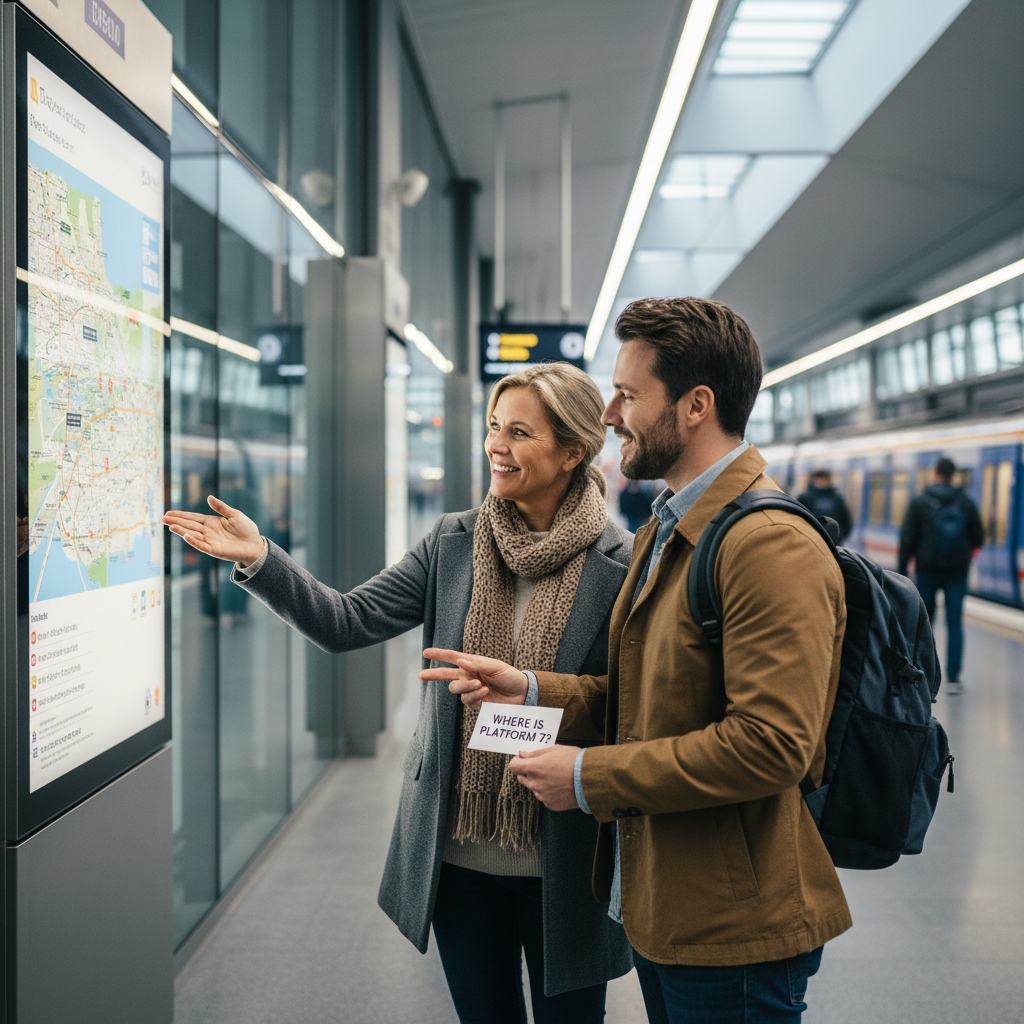
Directions and getting around
- Where is…? (bathroom, station, hotel, museum)
- How do I get to…?
- Left / Right / Straight
- Near / Far
- I’m lost.
Food and ordering
- A table for one/two, please.
- Do you have a menu in English? (if available)
- I would like this. (pointing works)
- Water, please.
- The check/bill, please.
Health and safety basics
- I need help.
- Please call the police.
- Please call an ambulance.
- I don’t feel well.
- I have an allergy to… (carry this in writing too)
If you have medical conditions, allergies, or complex prescriptions, it’s usually safer to carry a translated note from a clinician or pharmacist, and consult a professional before your trip if you’re unsure what to bring or how to explain it.
Mini phrasebook table: fast swaps you can memorize
Instead of memorizing hundreds of lines, memorize a few “frames” and swap the noun. This is where language travel phrases basic becomes practical.
| Frame (memorize) | Swap-in examples | Use it for |
|---|---|---|
| Where is ___? | bathroom, station, pharmacy, hotel | Finding places quickly |
| I would like ___. | this, water, coffee, tickets | Ordering without overthinking |
| How much is ___? | this, a ticket, the total | Prices and payments |
| Can you help me with ___? | directions, this address, this reservation | Getting assistance politely |
| I don’t understand. Can you ___? | repeat, speak slowly, write it down | Fixing miscommunication |
How to practice fast (without feeling like you’re studying)
Most people don’t need more phrases, they need faster recall. A little routine helps.
- Pick 12 phrases tied to your top two scenarios, put them in Notes as a short list.
- Read them out loud once a day for three days, even if your pronunciation feels awkward.
- Add numbers 1–20 and the multiples of 10. Prices and times become easier immediately.
- Practice “repair” lines more than “fancy” lines, those save you when things go sideways.
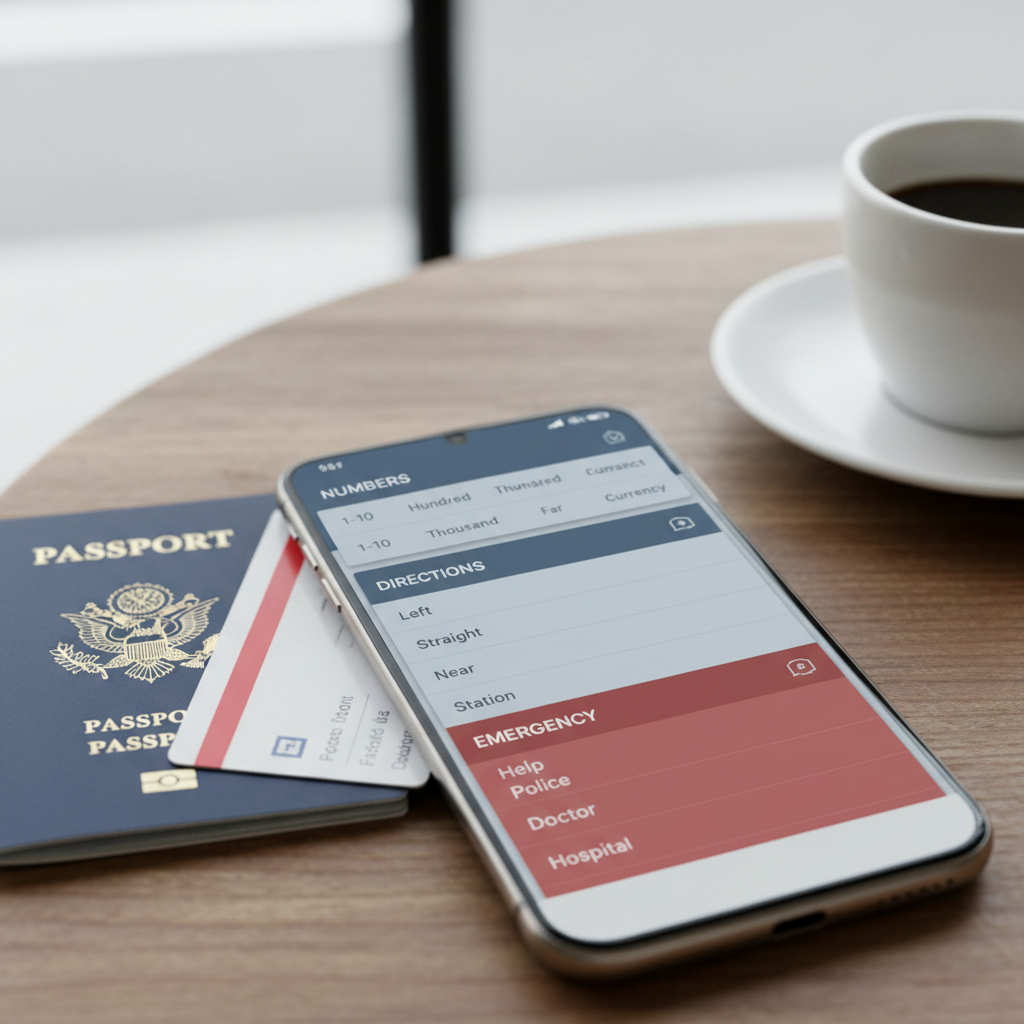
- Use a one-screen cheat sheet as your backup, not your main plan.
According to British Council (language learning advice), short, regular practice tends to be more effective than occasional long sessions. That’s good news for travelers because you can rehearse in minutes.
Real-world use: simple scripts for common moments
Here are short “say it in one breath” scripts. Keep your tone calm, point when helpful, and pause after key words.
At a hotel check-in
- Hello. I have a reservation. My name is ___.
- Could you repeat that, please?
- What time is check-out?
In a taxi or rideshare
- Please take me to this address. (show the address)
- How long does it take?
- Please stop here.
At a restaurant with allergies
- I have an allergy to ___.
- Does this have ___?
- Please no ___.
If your allergy is severe, relying on speech alone may be risky. Many travelers carry a printed allergy card in the local language and confirm with staff, and when in doubt, choose simpler dishes.
Common mistakes to avoid (they look small, but matter)
- Talking louder instead of slower. Volume rarely improves comprehension, pacing often does.
- Over-apologizing and adding extra words. Short sentences reduce misunderstandings.
- Only learning “cool” phrases. You’ll use “Where is…?” far more than slang.
- Skipping offline access. Download your cheat sheet and maps in case service drops.
- Not confirming key details. Repeat the number, time, or address back, even with gestures.
Conclusion: a small set of phrases changes the whole trip
language travel phrases basic work because they reduce friction, you start conversations politely, recover when you miss something, and handle directions, food, and help without panic.
Choose your two most likely scenarios, memorize 10–15 lines, and save a one-screen backup on your phone before you fly. That simple prep tends to pay off the first time you’re tired, hungry, and standing in the wrong line.
FAQ
What are the most important basic travel phrases to learn first?
Start with courtesy plus “repair” phrases: hello, please, thank you, excuse me, “I don’t understand,” and “Could you repeat that?” Those keep conversations friendly even when your vocabulary is limited.
How many phrases should a tourist realistically memorize?
For many trips, 10–20 lines cover the essentials if they’re the right ones. Add numbers and two emergency lines, then rely on a cheat sheet for everything else.
Is it rude to ask “Do you speak English?”
Usually not, if you ask politely and accept “no” gracefully. A softer approach is “Excuse me, do you speak English?” followed by “Thank you” either way.
What if my pronunciation is bad?
Many locals focus more on intent than accent. Speak slowly, use simple words, and pair your phrase with pointing, a map pin, or a written address to improve clarity.
Should I use a translation app or learn phrases?
Both works best. Use memorized basics for quick interactions, then use an app for detailed needs like special requests, complex directions, or medical information.
What basic phrases help most in an emergency?
“I need help,” “Please call the police,” “Please call an ambulance,” and “I’m lost” are strong starting points. If you have health concerns, carrying written info in the local language is a safer backup.
How do I ask for the bathroom in a respectful way?
“Excuse me, where is the bathroom?” plus a friendly tone is usually enough. In more formal settings, add “please,” and be ready to follow gestures rather than long explanations.
If you’re planning a multi-country trip or you want a more “grab-and-go” setup, it may help to build a destination-specific cheat sheet that matches your itinerary, hotel details, allergy needs, and transit routines, so you spend less time searching and more time moving confidently.