
How to use credit card abroad without fees comes down to a handful of practical choices: the right card, the right way to pay, and a couple of quick checks before you leave.
Most “mystery fees” aren’t actually mysterious, they’re usually foreign transaction fees, bad currency conversion at checkout, or ATM/cash-advance charges that feel like they came out of nowhere. The good news is you can avoid many of them without changing how you travel.
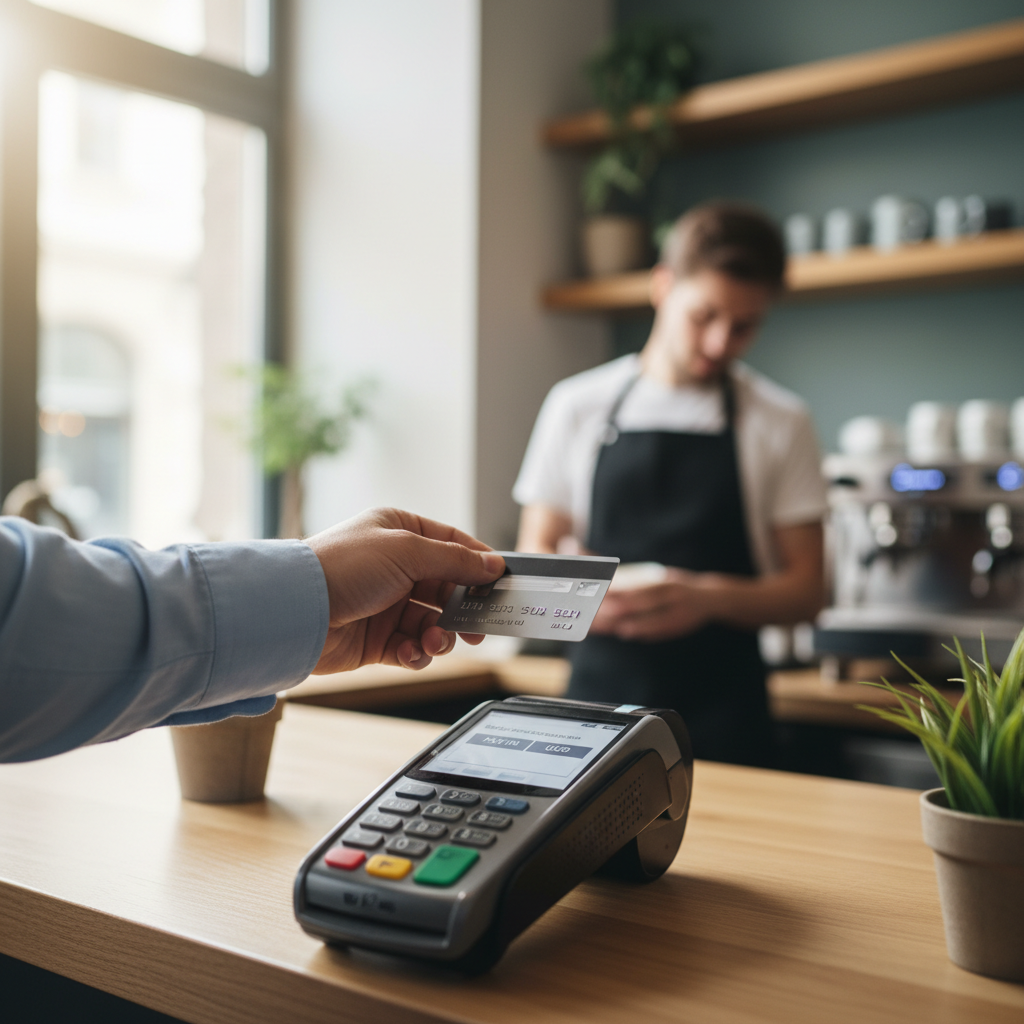
This guide breaks the topic into real travel moments, booking a hotel, paying at a restaurant, pulling cash in a pinch, and shows where fees sneak in plus what to do instead. You’ll also get a simple checklist and a quick comparison table so you can decide what matters for your trip.
Know the fee types that hit Americans abroad
If you want to use a card internationally without extra costs, start by naming the usual suspects. When you know what to look for, the fixes feel obvious.
- Foreign transaction fee: Commonly around 1%–3% on purchases processed outside the U.S. (even online purchases from foreign merchants). This is the big one.
- Dynamic currency conversion (DCC): When a terminal or website offers to charge you in USD “for convenience.” The exchange rate is often worse than your network rate.
- ATM and cash-advance costs: Using a credit card to get cash can trigger cash-advance fees and immediate interest, and the ATM owner may add its own surcharge.
- Merchant surcharges: In some countries, the business adds a card fee, especially for credit (less common in the U.S., more common elsewhere).
- Card replacement/shipping: Not a “transaction fee,” but still a cost if you lose a card and need express delivery.
According to the Consumer Financial Protection Bureau (CFPB), foreign transaction fees and currency conversion practices are common sources of consumer confusion when paying overseas, which is why it helps to plan your payment method before you’re standing at a terminal.
Pick the right card before you book anything
The easiest win is using a card that charges no foreign transaction fees. If your current card charges them, every smart “travel hack” later on becomes damage control.
What to look for (in plain English)
- No foreign transaction fee listed in the card’s pricing/terms.
- Visa or Mastercard network if you want broad international acceptance (acceptance varies by country and merchant category).
- Chip-and-PIN capability if you’re heading to places with unattended kiosks (train tickets, parking meters). Many U.S. cards are chip-and-signature; some work fine anyway, some kiosks are picky.
- Travel protections you’ll actually use, like rental car coverage, trip delay, or baggage coverage. Don’t overpay in annual fee for benefits that don’t match your travel style.
Before you apply for anything new, check the card you already have in your wallet. Many people assume their card is “a travel card” because it earns points, but it still charges foreign transaction fees.
Always decline Dynamic Currency Conversion (choose local currency)
In the real world, the biggest in-the-moment mistake is choosing USD at checkout. If you want to use a credit card internationally without extra costs, you usually want the charge in the local currency, not dollars.
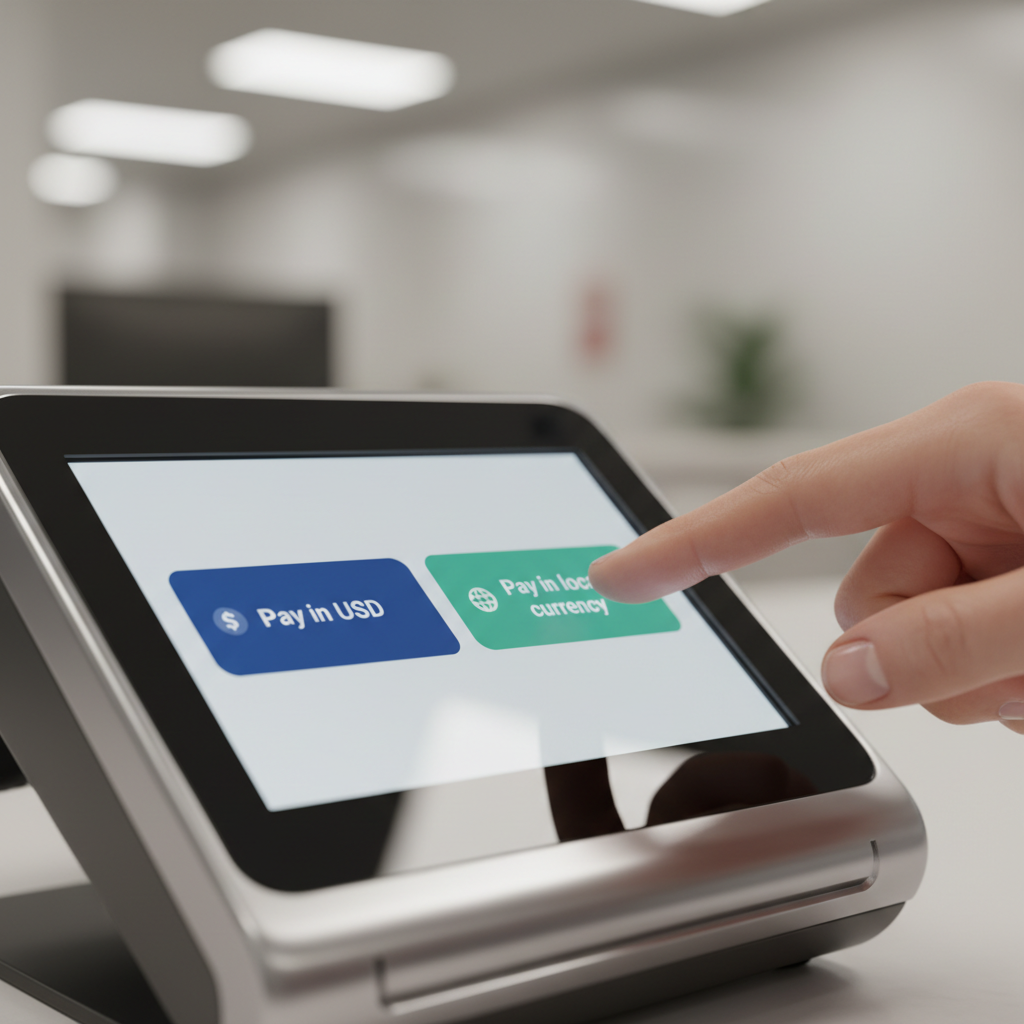
Here’s why: DCC lets the merchant (or their processor) set the exchange rate. Card networks typically use competitive wholesale-style rates, but DCC often adds a padded rate and sometimes extra margin.
What it looks like in practice
- The terminal asks: “Pay in USD or EUR?”
- A hotel booking page says: “We can charge you in USD today.”
- A cashier says: “Dollars okay?”
Your move: Pick the local currency and let your card network handle conversion. If the cashier insists they “have to” run it in USD, you can ask them to void and rerun in local currency, or choose another payment method if you’re not comfortable.
According to Visa, card network exchange rates apply when transactions are processed in the local currency, which is one reason travelers are often advised to avoid DCC when possible.
Use a quick self-checklist before your trip
If you’re trying to figure out how to use credit card abroad without fees for your specific situation, this checklist gets you to “yes/no” decisions fast.
- My card charges 0% foreign transaction fees (check your card’s terms, not a blog post from years ago).
- I can make purchases in local currency and I know to decline DCC.
- I have at least one backup payment option (second card on a different network, plus a debit card for ATM cash if needed).
- I notified myself, not necessarily my bank: I set up real-time alerts and confirmed my phone number/email is current.
- I understand cash rules: no credit-card cash advances unless it’s an emergency.
- I have travel coverage details saved (benefits hotline, replacement card number, issuer app access).
If you can’t check the first two boxes, you can still travel, but “no fees” becomes harder, and you’ll need to be extra careful at checkout.
Real-world payment playbook: hotels, restaurants, transit, and online bookings
This is where people get tripped up, not because they don’t know the theory, but because travel is busy and everyone wants you to tap and move on.
Hotels and car rentals (holds and deposits)
- Expect temporary authorization holds for incidentals. They’re not fees, but they can tie up credit limit.
- Ask whether the property will process in local currency, and keep your folio.
- For rentals, confirm what coverage your card offers and what the agency tries to sell. Terms vary a lot.
Restaurants (tipping and “pre-auth”)
- Some places run a higher pre-authorization than your final bill.
- If the terminal offers conversion, choose local currency.
- Keep receipts until charges post, especially in countries where tips are handled differently.
Transit and kiosks
- Unattended terminals may fail with some U.S. cards. Carry a backup card and a small amount of local cash.
- If contactless is common, using tap-to-pay can reduce swipe issues, but it won’t fix a foreign transaction fee problem.
Online bookings (airlines, tours, foreign sites)
- A foreign merchant can trigger fees even if you’re sitting in the U.S. booking at home.
- Watch for “Pay in USD” options during checkout and opt out.
- Save confirmations and use a card with strong dispute handling in case the vendor disappears or changes terms.
Fee-avoidance comparison table (what usually works)
If you’re deciding between “simple and safe” versus “maximum optimization,” this table keeps it grounded.
| Situation | What to do | Why it helps | Common trap |
|---|---|---|---|
| Everyday purchases abroad | Use a 0% foreign transaction fee credit card | Avoids the most common recurring fee | Using a points card that still charges 3% |
| Terminal offers USD vs local currency | Choose local currency | Typically avoids DCC markup | Picking USD for “certainty” |
| Need cash | Use a debit card at an ATM, not credit | Avoids cash-advance fees and immediate interest | Credit card cash withdrawal |
| Hotel deposit holds | Use credit, monitor available credit | Holds are normal and often released later | Assuming the hold is a fee and disputing too early |
| Backup plan | Carry a second card on another network | Improves acceptance and reduces downtime if blocked | Only one card, one issuer |
Practical steps to keep your trip “fee-light” day to day
Even with the right card, habits matter. These are the small moves that keep charges clean.
- Set purchase alerts in your issuer app, it helps you catch odd conversions or duplicate charges quickly.
- Pay attention to the receipt currency before you sign or tap away, that’s where DCC shows up.
- Avoid pay-at-pump surprises by choosing reputable stations and checking whether a “service fee” exists for cards.
- Don’t use credit for cash unless it’s a true emergency, cash-advance terms can be expensive.
- Know your PIN situation: Some U.S. credit cards allow a PIN for cash advances only, not purchases, so don’t assume you can use it like a debit PIN abroad.
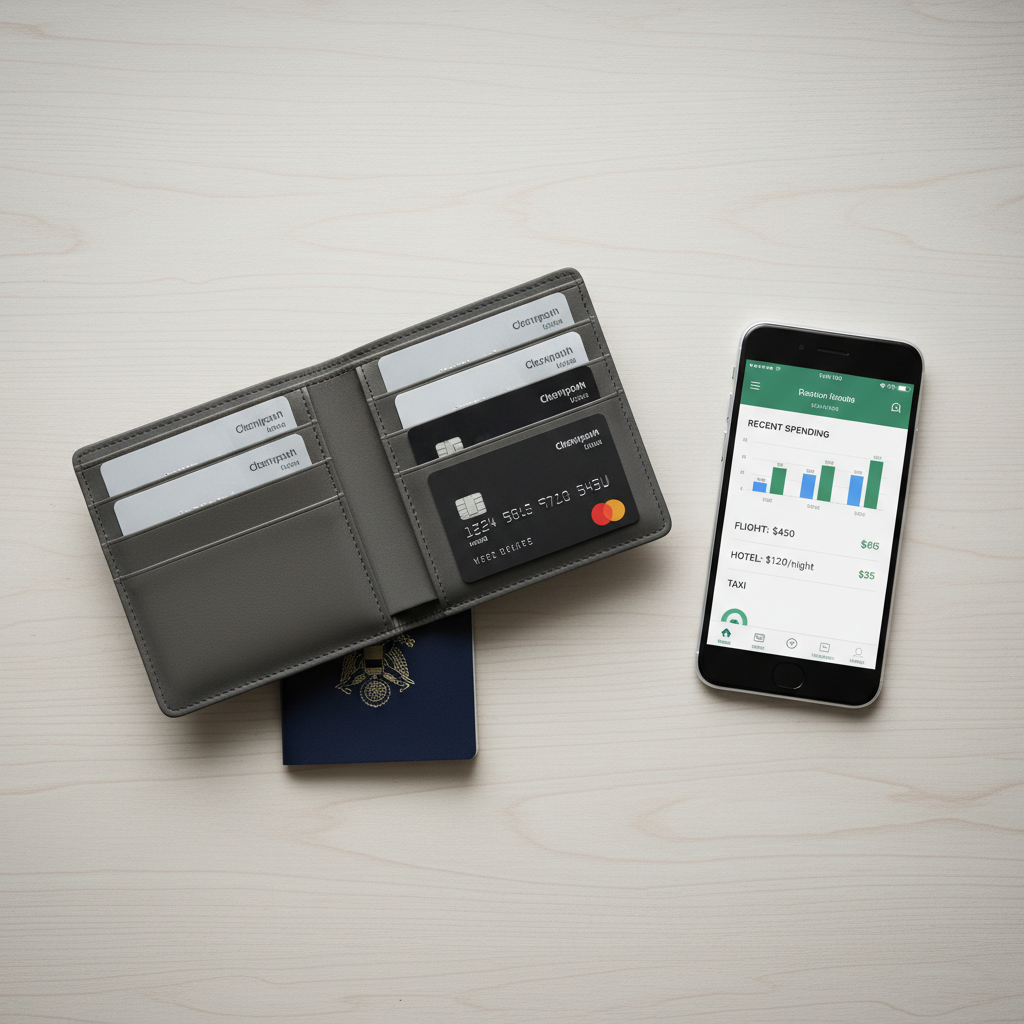
Key takeaways that stay true in most countries: pick a card with zero foreign transaction fees, pay in local currency, keep a backup option, and treat ATMs as a debit-card job.
When you might still see charges (and what to do)
Sometimes you do everything “right” and a cost still appears. That doesn’t always mean you got scammed, but it does mean you should verify.
- A fee from your card issuer: Check if your card quietly charges foreign transaction fees or if the merchant coded as foreign. If unclear, call the number on the back of your card.
- A merchant surcharge: In some places, the business can add a card fee. You can ask before paying and decide if cash makes more sense.
- An ATM operator fee: Many ATMs warn you on-screen. If it feels high, cancel and find another ATM.
- Exchange rate looks “off”: Confirm whether DCC was applied. If you were charged in USD unexpectedly, ask the merchant first, then dispute if appropriate.
According to the Federal Trade Commission (FTC), reviewing account statements and reporting suspicious charges quickly is a practical way to limit losses from unauthorized transactions, especially while traveling.
Conclusion: a simple plan that works for most trips
If you’re serious about how to use credit card abroad without fees, keep it simple: bring a card that does not charge foreign transaction fees, always pay in local currency, and use a debit card for ATM cash rather than triggering a credit cash advance. That combination covers most fee scenarios travelers run into.
Your next step can be small: check your card’s terms tonight, then set a spending alert before you board. Those two actions catch a surprising number of problems early.
FAQ
- Can I really use a credit card abroad with no fees?
Often, yes, if your card has no foreign transaction fee and you avoid dynamic currency conversion. Some costs can still appear, like merchant surcharges or ATM operator fees, depending on where you are. - Is it better to pay in USD or local currency when traveling?
In many situations, local currency is the safer choice because it avoids DCC markups and lets the card network convert the amount. If you’re unsure, look for wording like “guaranteed exchange rate” on the terminal, that’s commonly DCC. - Do debit cards have foreign transaction fees too?
They can. Many banks charge foreign transaction fees on debit purchases and may add ATM fees. If you plan to use ATMs abroad, check your bank’s fee schedule and the ATM on-screen warnings. - Will my credit card work in Europe or Asia if it’s chip-and-signature?
Usually it works for staffed purchases, like stores and restaurants. Unattended kiosks can be the pain point, so a backup card and a little cash help. - Should I tell my bank I’m traveling internationally?
Some issuers no longer require travel notices, but policies vary. A practical approach is ensuring your contact info is current and enabling transaction alerts, so you can respond quickly if a purchase is flagged. - Is using my credit card at an ATM abroad the same as withdrawing cash at home?
No. Many issuers treat it as a cash advance, which may include a fee and interest that starts immediately. If you need cash, using a debit card at an ATM is typically the cleaner option. - What if a merchant refuses to charge me in local currency?
You can ask them to rerun the transaction without conversion, or pay with a different method. If you feel pressured, it’s reasonable to walk away, especially for non-essential purchases.
If you’re trying to simplify travel payments and avoid the typical “why did this cost more than expected” moment, it can help to do a quick card audit and build a two-card setup before your next trip, it’s usually less work than chasing small fees after you get home.